
Chain Link Fence in China: Top Suppliers and Where to Buy
2026-09-24
China produces a huge share of the world’s chain link fence, but finding a supplier who won’t cut corners on galvanizing or wire gauge is harder than it looks. That’s where Topfencesolar stands out—turning the usual gamble of overseas sourcing into a straightforward, quality-first decision. Below, we map out the top suppliers and practical buying tips so you can skip the guesswork.
Mapping China's Chain Link Fence Production Landscape
The bulk of China's chain link fence output clusters in Anping County, Hebei, a place so tied to wire mesh that local factories source drawn wire, weaving machines, and galvanizing chemicals within a short drive. This tight geographic concentration cuts logistics costs and lets buyers place mixed orders across dozens of specialized workshops, though quality control varies sharply from one shed to the next.
Coastal provinces add a second layer to the map: assembly and export packing gravitate toward Tianjin, Qingdao, and Shanghai, where container availability and freight agents are denser. Larger plants near these ports run automated weaving and PVC coating lines for standardized rolls, while smaller inland operations still rely on hand-tied selvage and manual dipping to serve niche sizes, temporary site fencing, or quick-turnaround domestic projects.
The production landscape is shifting under pressure from stricter environmental inspections and volatile steel prices. Many small galvanizing shops have closed or merged, pushing surviving manufacturers toward closed-loop water treatment, powder coating, and higher-grade zinc-aluminum alloys. As a result, the old image of a commodity-only exporter is slowly giving way to a more stratified market: low-cost base mesh on one end, and anti-climb, privacy-slat-ready, or custom-color systems on the other.
Suppliers That Stand Out for Consistency and Scale
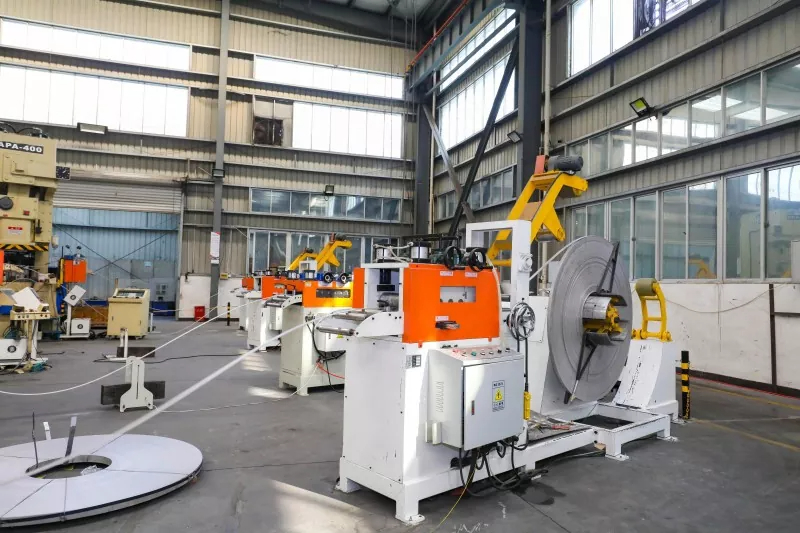
Consistency is often the hardest thing to maintain when order volumes climb, and the suppliers worth keeping are the ones who treat repeatability as a core discipline rather than a lucky streak. They tend to have documented processes, regular equipment calibration, and incoming material checks that don't get skipped when deadlines tighten. The result is not perfection, but a predictable output range: the same tolerance on the tenth container as on the first sample, the same pack weight, the same lead-time behavior. That kind of stability lets a buyer plan inventory without building in excessive safety stock out of fear.
Scale, on the other hand, separates suppliers who can handle a surge from those who only look good in a pilot run. A supplier that stands out for scale usually has multiple production lines, backup tooling, or contract capacity with trusted partners, and they have already stress-tested those resources rather than discovering them mid-crisis. They also tend to communicate more like logistics operators than sales teams, flagging raw material risks early, confirming capacity before accepting an order, and reporting output in numbers a warehouse can actually rely on. When both consistency and scale are present, the supplier stops being a vendor and starts functioning like an extension of your own operations.
Spotting Red Flags Before You Commit to a Factory
Most people walk into a factory and get distracted by shiny showrooms. I've learned to watch the production floor instead. If workers look rushed but nothing is moving, or if the same sample cart keeps getting wheeled past your tour, that's a problem. Check the maintenance logs on the machines—not the digital dashboards, the grease-stained paper ones. If they're blank or dated last week before your visit, walk away.
During negotiations, pay attention to what's not being said. A factory that agrees to every deadline without asking about your order volume or materials is either desperate or lying. Genuine manufacturers push back on unrealistic specs. If the sales rep keeps changing their story about minimum order quantities or suddenly offers a price 30% below other quotes, that's not a bargain—it's a trap. Ask for a list of current clients who aren't references. If they stammer, that tells you everything.
Never skip the surprise visit. Call them from the parking lot and say you're in the neighborhood. If they make you wait 45 minutes while they 'prepare,' you're seeing a performance, not a factory. Real production has noise, mess, and workers who complain about long hours. If everything feels too quiet and too clean, your goods are probably being outsourced to another facility you've never vetted.
Galvanization, Coatings, and Wire Gauge: What Actually Matters
Most buyers fixate on wire gauge as if a smaller number automatically means a better fence or mesh panel. That is only part of the picture. A thicker wire with a poor galvanized layer will still rust through long before a slightly thinner wire with a heavy, well-bonded zinc coating. The real question is how the three variables work together under your specific conditions — humidity, soil chemistry, animal pressure, and installation stress.
Galvanization is usually the quiet winner or loser. Hot-dip galvanizing with a substantial zinc weight per square foot outperforms thin electroplated finishes, especially on cut edges and weld points. Coatings like zinc-aluminum alloys or polymer overlays can extend life further, but they also change how the wire reacts to bending and abrasion. If you are comparing products, ask for the coating thickness and adhesion method, not just the color or marketing name.
Wire gauge still matters for rigidity and impact resistance, but only after the corrosion protection is adequate. A 9-gauge core wire with weak galvanization will bend and rust sooner than a 12.5-gauge high-tensile wire with a thick zinc-aluminum coat in many real-world settings. Match the gauge to the load requirement, then prioritize the coating system — that order is where long-term value actually comes from.
From Port to Project: Handling Logistics Without the Headaches
The moment cargo hits the dock, the clock starts on demurrage and storage fees that can quietly eat into your budget. One mismatched bill of lading or a missing packing list can hold a container for days, and port congestion only makes the wait longer. Instead of treating documentation as an afterthought, assign someone to cross-check every shipping document before the vessel arrives. A quick call to the customs broker to confirm tariff codes and inspection requirements beats finding out about a hold after the fact.
Once the container clears, the real work begins: getting it from the port gate to your site without losing a day to truck shortages or road permit surprises. Booking inland transport only after arrival is a recipe for expensive delays. Smart project teams lock in local haulers weeks ahead, confirm axle weight limits, and ask about port cutoff times. A live tracking link from the freight forwarder is not a nice-to-have; it’s how you catch a stuck truck before it becomes a missed concrete pour.
At the project end, a smooth handoff depends on preparation that rarely shows up in the logistics plan. Someone needs to be on site to receive the delivery, verify seal numbers, and check for damage before signing anything. Have a forklift or crane ready if the materials can’t be unloaded by hand, and know where the shipment will be stored. When shortages or damage occur, document them with photos immediately and notify the carrier within the required window. Folding these steps into the master schedule keeps a late delivery from turning into a stalled crew and a blown deadline.
Negotiation Tactics That Go Beyond the Initial Quote
Many buyers treat the first number on the table as a floor, not a ceiling. But experienced negotiators know that the real conversation starts after the quote is delivered. Instead of immediately countering with a lower price, shift the focus to value levers that aren't visible on paper—delivery timelines, payment terms, bundled services, or warranty scope. These often carry more weight than a marginal discount and can reshape the deal without touching the headline figure.
Another overlooked move is to anchor the discussion around total cost of ownership rather than unit price. Ask the supplier to break down what drives their number: raw materials, labor, logistics, overhead. Once the components are on the table, you can challenge each line item individually. A 5% reduction in logistics plus a 90-day payment extension can quietly outperform a generic 10% price cut, because it targets the seller's actual pain points instead of just applying pressure.
Finally, don't underestimate the power of walking away from the initial quote without burning the bridge. State clearly that the current offer doesn't align with your budget or market benchmarks, then set a deadline for a revised proposal. Silence after that statement often does more work than another round of back-and-forth. Sellers who fear losing a qualified buyer will often come back with a materially better structure—one that was never available in the first quote because it wasn't yet negotiated.
FAQ
Hebei's Anping County is the undisputed center, often called the 'hometown of wire mesh' in China. It has thousands of factories and a complete supply chain for raw wire, galvanizing, and accessories. Other notable areas include Jiangsu and Zhejiang for higher-end PVC-coated fences, and Guangdong for export-oriented production with fast access to ports.
Check the factory's business license and export records, ask for product certifications like ISO 9001, CE, or ASTM compliance, and request samples before placing a bulk order. A video tour or third-party inspection can reveal whether they have automatic welding machines and proper galvanizing lines. Avoid suppliers that only act as middlemen and cannot show their own production facility.
Most manufacturers can adjust wire diameter, mesh opening, roll height and length, coating type (hot-dip galvanized, electro-galvanized, or PVC coated), frame pipe diameter, and even color. Many work from customer drawings or samples, so you can get a fence tailored to specific project requirements without paying for a fully bespoke product.
MOQs usually range from 500 to 1,000 rolls or around 1,000 square meters, but smaller factories may accept 100 rolls or 200 square meters at a slightly higher unit price. For large infrastructure projects, the MOQ is often negotiable, and some suppliers keep standard sizes in stock for quicker turnaround.
Production typically takes 15 to 30 days depending on order size and customization. Ocean freight to the US West Coast adds about 15 to 20 days, while Europe takes 30 to 40 days. Including customs clearance and inland trucking, plan for a total lead time of two to three months. Some suppliers stock common sizes and can ship within a week.
Export-oriented factories often produce to ASTM A392, ASTM F567, BS 1722, or EN 10223. They commonly use Q195 or Q235 low-carbon steel, apply zinc coating from 40 to 275 g/m², and PVC coating thickness between 0.4 and 0.6 mm. Always request a third-party test report from SGS, BV, or Intertek to verify the stated specifications.
Yes, unit prices from Chinese factories are often 30 to 50 percent lower than those from local distributors in Europe or North America due to lower material and labor costs. However, you must account for international freight, import duties, port fees, and potential anti-dumping duties, especially in the US. A total landed cost comparison will show whether direct sourcing makes financial sense for your order size.
The most common terms are 30 percent deposit via T/T with the balance paid before shipment, or 30 percent deposit and the balance against a copy of the bill of lading. New customers rarely get open account terms, but established buyers may negotiate O/A 30 to 60 days. Letters of credit are possible but add bank charges and paperwork, so T/T is generally preferred for smaller orders.
Conclusion
Sourcing chain link fence from China means looking past flashy catalogs and into the actual production clusters. Most capacity sits in Hebei's Anping County, where dozens of factories run automated weaving and welding lines, but real differentiation shows up in how they handle zinc coating, wire gauge consistency, and post-galvanizing inspection. The suppliers worth shortlisting are not always the biggest; they are the ones who can show batch-level test reports, keep raw wire inventories tied to specific steel mills, and maintain a steady output for standard mesh without cutting corners on edge trimming or tension bar alignment. Before committing, check whether a factory subcontracts its galvanizing or does it in-house, and ask for a sample from current production rather than a hand-picked display piece.
On the buying side, the first quote is rarely the real number. Push for a breakdown of wire gauge, zinc coating weight, selvedge type, and packaging; small shifts in any of these change both price and durability. Logistics matter just as much as factory price. Decide early whether you need full container loads from Tianjin or Qingdao, and confirm who handles customs documentation, palletizing, and inland trucking to the port. Good suppliers will offer loading photos and a packing list tied to the actual shipment. Red flags include vague answers about coating thickness, sudden changes in lead time after deposit, or reluctance to share production line footage. The goal is not the cheapest fence but one that arrives intact, matches the agreed spec, and stands up to weather without rusting through in two seasons.
Contact Us
Contact Person: Nancy
Email: [email protected]
Tel/WhatsApp: +86-13365923720
Website: https://www.topfencesolar.com/