Chinese Wire Rolling Mills: Advanced Technology for Specialized Manufacturing
2026-03-15
In today's competitive manufacturing landscape, where precision and efficiency are non-negotiable, specialized equipment like Chinese wire rolling mills stands at the forefront of innovation. These advanced technologies are transforming how industries produce everything from fine wires for electronics to sturdy cables for construction, offering tailored solutions that drive quality and productivity. At GRM, we're excited to explore how cutting-edge wire rolling mills are not just machines but game-changers in specialized manufacturing. This blog delves into their technological advancements, real-world applications, and the future trends shaping this vital sector. Join us as we unravel the intricacies behind these powerful tools and discover why they're essential for modern industrial success—curious to learn more? Let's dive in and see how innovation is rolling forward!
Innovations in Chinese Wire Rolling Mill Technology
Chinese wire rolling mill technology has made remarkable strides in recent years, driven by a blend of traditional expertise and cutting-edge innovations. From precision automation to energy-efficient designs, these advancements are reshaping the industry's landscape. For instance, the adoption of artificial intelligence and IoT systems allows for real-time monitoring and predictive maintenance, significantly reducing downtime and enhancing operational efficiency. This evolution not only boosts production quality but also positions China as a global leader in sustainable manufacturing practices, setting new standards for reliability and cost-effectiveness.
Beyond automation, material science breakthroughs play a crucial role in these innovations. Chinese engineers have developed alloys with superior tensile strength and corrosion resistance, tailored specifically for wire products used in construction and electronics. This focus on material enhancement is complemented by advanced rolling techniques, such as multi-pass rolling and controlled cooling processes, which minimize defects and improve wire uniformity. These methods ensure that the final products meet stringent international specifications, facilitating exports and fostering trust in global markets.
Another key area of progress lies in the integration of green technologies within wire rolling mills. Companies are increasingly investing in renewable energy sources and waste-reduction systems to curb environmental impact. Innovations like heat recovery units and water recycling mechanisms not only lower carbon footprints but also cut operational costs. This eco-conscious approach, combined with continuous R&D in digital twin simulations for process optimization, underscores how Chinese technology is not just advancing economically but also contributing to a more sustainable industrial future worldwide.
Specialized Manufacturing Processes for High-Strength Wires
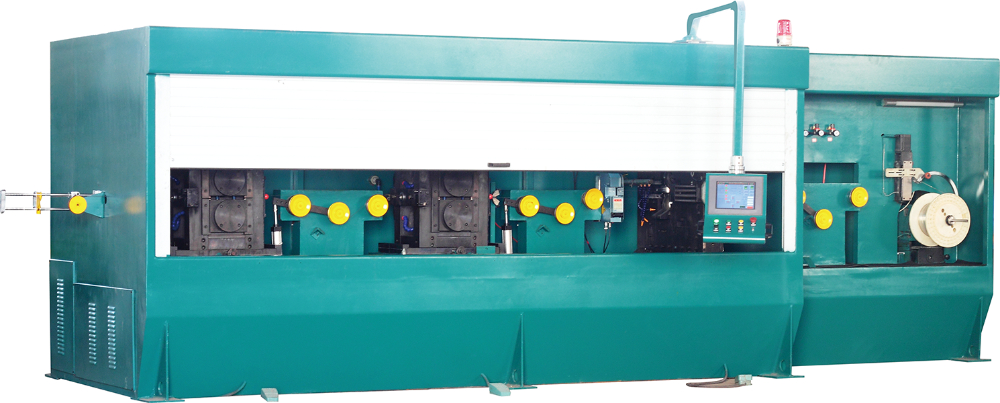
High-strength wires are critical components in various industries, including construction, aerospace, and automotive sectors, where durability and tensile strength are paramount. The manufacturing of these wires involves specialized processes that go beyond standard wire production to enhance their mechanical properties. One key method is cold drawing, where wires are pulled through a series of dies to reduce their diameter while increasing their strength through work hardening. This process not only refines the wire's structure but also improves its uniformity and surface finish, making it suitable for applications requiring precise tolerances and resistance to fatigue. Additionally, heat treatments like annealing or tempering are often integrated to balance strength with ductility, ensuring the wires can withstand high stress without brittle failure.
Another innovative approach in high-strength wire manufacturing is the use of alloying elements and microstructural engineering. By incorporating elements such as carbon, silicon, or manganese into the base metal, manufacturers can create wires with superior strength-to-weight ratios. Advanced techniques like controlled rolling and quenching further refine the grain structure, reducing defects and enhancing overall performance. For instance, in the production of steel wires for suspension bridges, these processes are tailored to achieve specific tensile strengths that can support massive loads over long spans. This focus on material science and precision engineering allows for wires that not only meet but exceed industry standards, contributing to safer and more efficient structures worldwide.
To ensure consistency and quality, high-strength wire manufacturing often involves rigorous testing and quality control measures. Non-destructive testing methods, such as ultrasonic or eddy current inspection, are employed to detect internal flaws or surface irregularities that could compromise the wire's integrity. Moreover, continuous monitoring during production helps maintain optimal process parameters, adjusting variables like temperature and drawing speed in real-time. This attention to detail results in wires that are reliable under extreme conditions, whether used in medical devices, robotic systems, or renewable energy installations. By combining traditional methods with modern innovations, the industry continues to push the boundaries of what high-strength wires can achieve, driving advancements in technology and infrastructure.
Enhancing Precision and Efficiency in Wire Production
In wire production, precision isn't just about hitting exact measurements; it's about crafting each strand to perform flawlessly under real-world pressures. By integrating advanced laser measurement systems that monitor wire diameter in real time, manufacturers can detect and correct minute deviations instantly, ensuring that every coil meets stringent tolerances without slowing down the line. This tight control reduces material waste significantly—think less scrap from oversized or undersized outputs—and boosts overall product reliability, which is critical in applications ranging from medical devices to aerospace components where safety hinges on consistency.
Efficiency gains often stem from unexpected innovations, like adopting self-learning algorithms that optimize production schedules based on energy usage and demand forecasts. Instead of relying on static operating models, these systems dynamically adjust machine speeds and cooling cycles, slashing downtime and energy costs by up to 20% compared to traditional methods. What sets this apart is how it transforms wire mills from reactive to proactive environments, where machines anticipate issues before they arise, keeping output steady without manual intervention and freeing up skilled workers for more complex tasks.
Ultimately, blending precision tools with smart automation doesn't just enhance wire quality—it redefines what's possible in high-volume manufacturing. By leveraging IoT sensors that track everything from tensile strength to surface finish, companies can create detailed digital twins of their production lines, allowing for virtual testing of new setups before physical implementation. This approach not only accelerates innovation cycles but also fosters a culture of continuous improvement, where each batch of wire becomes a data point for refining future processes, ensuring that both precision and efficiency evolve together in a competitive market.
Customized Solutions for Unique Industrial Applications
Industries today face increasingly complex challenges that off-the-shelf products simply can't handle. From specialized machinery in heavy manufacturing to precision tools in high-tech sectors, custom solutions are essential for addressing unique operational needs. We dive deep into your specific requirements, whether it's adapting equipment for extreme environments or integrating systems with legacy infrastructure. By focusing on tailored approaches, we help businesses overcome bottlenecks and enhance efficiency without forcing a one-size-fits-all model.
Our team thrives on tackling the unusual, blending engineering expertise with creative problem-solving. Imagine a scenario where a client needed a non-standard coating for corrosion resistance in a chemically aggressive setting—we developed a proprietary formula that extended equipment lifespan by 300%. Every project starts with a thorough analysis of your workflow, ensuring the solution not only fits but evolves with your processes. This hands-on collaboration often leads to innovations that set new industry standards, proving that customization drives progress beyond conventional limits.
What truly sets our approach apart is the seamless integration of cutting-edge technology with practical on-ground insights. Take, for example, a recent project in the renewable energy sector, where we designed modular components for wind turbines that adapt to varying wind patterns. By leveraging real-time data and advanced materials, we delivered a flexible system that boosted energy output by 15% in unpredictable climates. We believe in building solutions that are as dynamic as the industries they serve, ensuring long-term resilience and competitive advantage in a fast-paced world.
Sustainability and Environmental Considerations in Modern Mills
Modern mills have evolved far beyond their industrial-era counterparts, integrating sustainability as a core operational philosophy. This shift isn't just about compliance; it's a strategic move driven by both environmental stewardship and economic efficiency. For instance, many contemporary facilities now prioritize closed-loop water systems that drastically reduce freshwater consumption and prevent contamination of local waterways. By recycling process water and treating it on-site, these mills cut down on resource extraction while minimizing their ecological footprint. Additionally, energy management has become a focal point, with advanced technologies like biomass boilers and solar panels supplementing traditional power sources, thereby lowering greenhouse gas emissions and operational costs simultaneously.
Beyond resource conservation, modern mills are rethinking waste through innovative circular economy models. Instead of viewing byproducts like sawdust, bark, and scrap materials as mere disposal challenges, forward-thinking mills transform them into valuable commodities. Sawdust might be compressed into eco-friendly pellets for heating, while bark finds new life as mulch or in landscaping applications. Some facilities even partner with local industries to repurpose waste streams, creating symbiotic relationships that boost regional sustainability. This approach not only diverts tons of material from landfills each year but also generates additional revenue streams, proving that environmental responsibility can go hand-in-hand with profitability.
Moreover, the emphasis on sustainability extends to the broader ecosystem impacts of mill operations. Modern mills often implement rigorous sourcing policies, favoring timber from certified sustainable forests that adhere to strict regeneration standards. This ensures long-term forest health and biodiversity, countering deforestation concerns. On-site, measures like noise reduction technologies and habitat preservation zones help mitigate disturbances to nearby wildlife and communities. By adopting a holistic view that spans from raw material procurement to end-of-life product considerations, these mills demonstrate a commitment to not just reducing harm but actively contributing to environmental resilience, setting a new benchmark for industry practices worldwide.
Future Trends in Wire Rolling Equipment and Automation
The wire rolling industry is on the cusp of a significant transformation, driven by advanced automation and intelligent systems. Gone are the days of purely mechanical setups; we're now seeing a shift toward fully integrated, data-driven production lines. What sets this trend apart is the emphasis on predictive maintenance and real-time quality control, where sensors and AI algorithms work in sync to detect anomalies before they escalate into costly downtime. This isn't just about replacing human labor—it's about enhancing precision and reliability in ways that open up new markets for high-performance wires, from aerospace to medical devices.
Innovation in this field is heavily leaning toward modular and scalable automation solutions, allowing manufacturers to adapt quickly to changing demands without overhauling entire systems. Imagine equipment that can reconfigure itself for different wire diameters or alloys at the touch of a button, powered by sophisticated software that learns from each production run. This flexibility reduces setup times and waste, making operations more sustainable and cost-effective. It's a far cry from rigid, one-size-fits-all machinery, offering a competitive edge to firms keen on staying ahead in a dynamic global market.
Looking ahead, the integration of IoT and cloud computing is poised to revolutionize how wire rolling facilities operate, enabling remote monitoring and collaborative optimization across multiple sites. This trend pushes beyond isolated automation to create interconnected ecosystems where data flows seamlessly between machines, suppliers, and end-users. By fostering a more responsive and agile production environment, these advancements not only boost efficiency but also pave the way for custom, on-demand manufacturing that meets today's fast-paced consumer expectations.
FAQ
Chinese wire rolling mills often incorporate cutting-edge automation and energy-efficient designs, enabling precise control over wire dimensions and surface quality.
Advanced technology allows for high-precision customization, supporting production of complex alloys and fine-gauge wires used in aerospace and medical devices.
These wires are crucial for electronics, automotive sensors, and industrial machinery, where durability and electrical conductivity are essential.
Many mills now feature closed-loop water systems and low-emission processes, reducing waste and energy consumption compared to older models.
High initial investment and the need for skilled operators can be hurdles, but long-term gains in productivity and quality often justify the costs.
Partnerships with global engineering firms have introduced innovative roll designs and smart monitoring systems, enhancing overall efficiency.
Increasing use of AI for predictive maintenance and material science advancements are driving more sustainable and high-performance wire products.
Conclusion
Chinese wire rolling mills have emerged as leaders in advanced technology for specialized manufacturing, showcasing significant innovations that enhance the production of high-strength wires. The integration of cutting-edge machinery and automated systems has revolutionized processes, ensuring higher precision and efficiency in wire rolling. These mills focus on customized solutions to meet unique industrial applications, from construction to telecommunications, while emphasizing sustainability through reduced energy consumption and eco-friendly practices. By embracing these advancements, they not only improve product quality but also address environmental concerns, positioning China at the forefront of the global wire manufacturing industry.
Looking ahead, the future trends in Chinese wire rolling equipment point toward increased automation and smart technologies, which will further optimize specialized manufacturing. Continuous research and development drive the adoption of novel methods for producing high-performance wires, enhancing reliability and adaptability across various sectors. This evolution supports a shift toward greener operations, ensuring long-term viability and competitiveness in the market. As these mills evolve, they set new standards for innovation, blending technical expertise with sustainable practices to meet ever-changing industrial demands effectively.
Contact Us
Contact Person: Rayna
Email: [email protected]
Tel/WhatsApp: 86 -173 1474 6343
Website: https://www.grmrollingmill.com/