
Enhancing Electrical Systems: OEM Potential Transformers for Safe and Efficient Power Management
2026-01-11
In the complex world of electrical systems, safety and efficiency are paramount. Yet, many overlook the critical role that potential transformers play in achieving these goals. As we delve into the significance of OEM potential transformers for power management, we at Lugao are excited to share insights that transform how you approach your electrical infrastructure. From preventing hazards to optimizing performance, discover why these components are not just accessories but essential tools for modern power systems. Join us as we explore the cutting-edge advancements and practical solutions that make a real difference in your operations.
Understanding the Role of OEM Potential Transformers in Modern Power Grids
In the intricate architecture of modern power grids, where voltage regulation and grid stability are paramount, OEM potential transformers (PTs) serve as the critical eyes and ears of the system. Unlike off-the-shelf options that might offer a generic fit, OEM models are specifically engineered by original equipment manufacturers to integrate flawlessly with a particular grid's infrastructure, ensuring optimal performance from the outset. These transformers step down high transmission voltages to safer, measurable levels, enabling control systems to monitor and manage grid conditions in real time—something essentially when dealing with the dynamic loads and renewable energy fluctuations characteristic of contemporary networks. Their precision is non-negotiable, as even minor inaccuracies can cascade into significant operational issues, from protective relay malfunctions to billing errors for utilities and consumers alike.
What truly sets OEM potential transformers apart is their bespoke design, tailored to meet unique grid specifications for factors like insulation, accuracy class, and environmental resilience. For instance, in a grid incorporating substantial solar or wind power, OEM PTs might be calibrated to handle the voltage sags and swells that renewables introduce, providing reliable data for grid balancing. This customization enhances not just reliability but also longevity, as components are matched to withstand local climatic challenges—be it extreme temperatures or coastal corrosion. By delivering voltage signals that are consistently accurate and stable, these transformers empower advanced monitoring tools, such as phasor measurement units, to detect anomalies like faults or instability before they escalate, thus acting as a frontline defense in grid protection.
Beyond mere measurement, the role of OEM potential transformers extends into facilitating smart grid innovations and sustainability goals. As grids evolve toward greater automation and bidirectional power flows, with prosumers feeding energy back into the system, the data from these PTs becomes invaluable for managing distributed generation and ensuring seamless integration. Manufacturers often leverage proprietary materials and testing protocols to push the boundaries of efficiency, reducing losses and supporting grid decarbonization efforts. In essence, OEM potential transformers are not just passive components but active enablers of a resilient, adaptive power infrastructure, quietly underpinning the transition to more intelligent and reliable energy networks worldwide.
Key Features and Design Innovations for Enhanced Electrical Safety
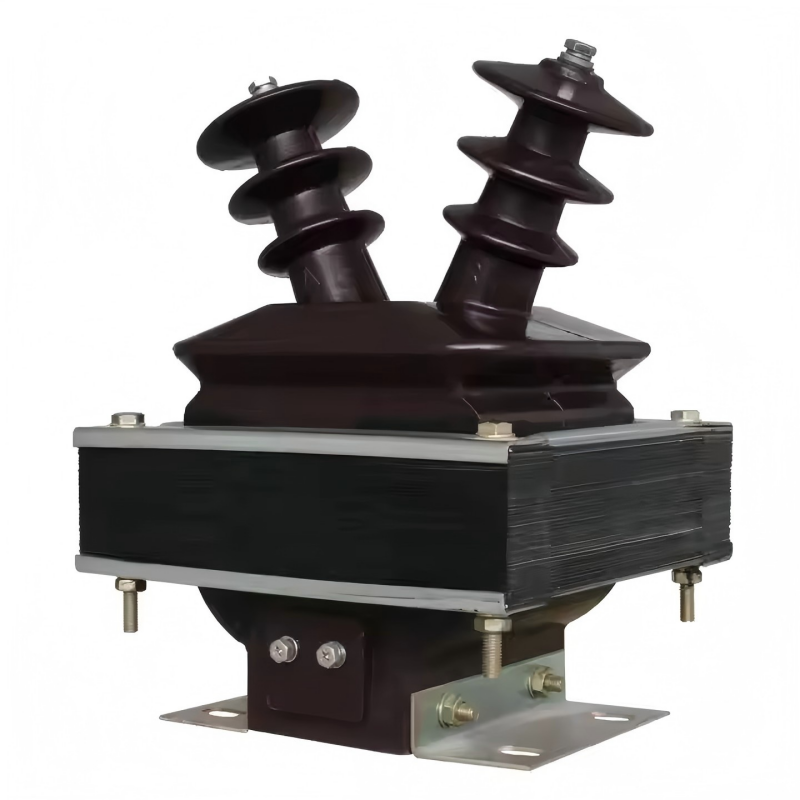
Ensuring electrical safety has always been a top priority in modern engineering, with recent innovations focusing on proactive measures rather than simply reacting to potential hazards. Advanced insulation materials, such as ceramic coatings and high-temperature polymers, significantly reduce the risk of electrical leakage and short circuits. These materials are designed to withstand extreme conditions, ensuring consistent performance even in demanding environments.
Beyond materials, smart monitoring systems play a crucial role in enhancing safety by providing real-time data on electrical parameters like voltage fluctuations and temperature changes. These systems can automatically trigger shutdowns or alerts when anomalies are detected, minimizing the chance of electrical fires or equipment damage. By integrating sensors with cloud-based analytics, they offer a seamless and responsive approach to managing electrical integrity.
Human-centric design innovations also contribute to electrical safety, with features like touch-safe connectors and clearly labeled control panels that prevent accidental contact with live parts. These elements are not just functional; they are intuitive, making it easier for operators to handle electrical systems with confidence. Such ergonomic considerations ensure that safety is embedded into every interaction, fostering a culture of prevention in both industrial and domestic settings.
How OEM Transformers Improve Efficiency and Reduce Energy Losses
Original Equipment Manufacturer (OEM) transformers significantly enhance efficiency by integrating advanced materials and designs tailored to specific electrical systems. They utilize high-grade silicon steel cores that minimize hysteresis losses, leading to cooler operation and reduced energy waste. By optimizing winding configurations and insulation, these transformers ensure more stable power flow, directly lowering overall energy consumption in industrial and commercial applications.
Innovative cooling mechanisms in OEM transformers, such as liquid-filled or forced-air systems, play a key role in cutting energy losses. These methods maintain optimal operating temperatures, preventing thermal degradation that can sap efficiency over time. As a result, businesses experience fewer interruptions and lower maintenance costs, contributing to a more sustainable energy footprint without compromising performance.
Customization allows OEM transformers to match exact load requirements, eliminating the inefficiencies common with generic models. This precision engineering reduces stray losses and improves voltage regulation, leading to significant long-term savings on energy bills. By focusing on real-world applications, OEM solutions deliver a tangible impact on reducing greenhouse gas emissions and promoting energy conservation.
Integration Strategies for Seamless Power Management Systems
When we think about powering our devices, it's easy to overlook how different components work together behind the scenes. Integration strategies focus on making these connections smoother, so whether you're charging a phone or running a data center, the system feels almost invisible. By blending hardware and software elements, these approaches minimize interruptions and ensure energy flows where it's needed without hiccups.
One might consider real-world scenarios like smart homes, where lights, thermostats, and appliances sync automatically. Here, integration isn't just about wires; it's about predictive algorithms that adjust power usage based on habits. This reduces waste and enhances reliability, making daily life simpler. It's a subtle shift from isolated gadgets to a cohesive network that responds intuitively to user needs.
Looking forward, as technology evolves, integration will likely become more personalized and adaptive. Imagine systems that learn your schedule to optimize battery life or adjust industrial machinery's output on the fly. These strategies aren't just technical fixes; they're about creating experiences where power management feels effortless and tailored, ultimately saving resources and boosting performance across various applications.
Real-World Applications and Case Studies in Industrial Settings
In the world of industrial automation, it's easy to get lost in theoretical frameworks and abstract models, but it's the tangible, on-the-ground applications that truly transform factories and supply chains. Consider how predictive maintenance powered by IoT sensors has evolved beyond mere cost-saving tactics; now, it's driving a cultural shift toward proactive asset management. For instance, a mid-sized manufacturing plant in Germany recently shared insights from implementing such systems—they didn't just reduce downtime by 30%, but also uncovered subtle inefficiencies in energy usage that had gone unnoticed for years. This case highlights how real-world deployments often reveal unexpected benefits, turning data streams into strategic assets that fuel continuous improvement.
Drawing from diverse sectors like pharmaceuticals and automotive, case studies underscore that one-size-fits-all solutions rarely suffice in industrial settings. Take a pharmaceutical company's journey with AI-driven quality control: while initial pilots focused on defect detection, the team discovered that the algorithms could also predict batch variations based on environmental factors, leading to more resilient production lines. Another compelling example comes from a steel mill in Japan, where integrating robotics with human operators didn't just boost productivity—it fostered collaboration, with workers using augmented reality interfaces to troubleshoot in real-time. These stories emphasize that successful applications hinge on adapting technology to specific operational contexts, blending innovation with deep industry expertise.
Beyond technical triumphs, industrial case studies often reveal the human element at the heart of digital transformation. In a North American logistics hub, deploying blockchain for supply chain transparency started as a compliance measure but grew into a trust-building tool among partners, reducing disputes by 40%. Meanwhile, a renewable energy firm's pilot with digital twins illustrated how simulating entire wind farms under various conditions could optimize maintenance schedules, but more importantly, it empowered engineers to experiment without risking physical assets. These narratives show that when theory meets practice, the outcomes aren't just about metrics—they reshape workflows and relationships, proving that industrial progress is as much about people as it is about machines.
Future Trends and Advancements in Transformer Technology
As transformer technology continues to evolve, one of the most exciting directions lies in the development of more efficient and scalable architectures. Researchers are actively exploring techniques like sparse attention mechanisms and model compression to reduce the computational demands of large language models, making them more accessible for real-time applications and edge computing. This shift towards leaner, faster transformers could revolutionize fields from healthcare diagnostics to autonomous systems, where speed and resource constraints are crucial.
Beyond efficiency, advancements are pushing the boundaries of multimodal integration, enabling transformers to process not just text but also images, audio, and video in a unified framework. Innovations like vision transformers and cross-modal attention layers are fostering models that understand context across different data types, leading to more intuitive AI assistants and creative tools. This holistic approach is key to building systems that mimic human-like perception and interaction in complex environments.
Looking ahead, the focus on interpretability and ethical AI is shaping transformative trends. Efforts to make transformer decisions more transparent, such as through attention visualization and explainable AI methods, aim to build trust and address biases in automated systems. Coupled with advancements in few-shot and zero-shot learning, these developments promise more adaptable, fair, and responsible AI, paving the way for transformers to tackle global challenges from climate modeling to personalized education with greater reliability.
FAQ
OEM potential transformers step down high voltages to safer levels, enabling accurate monitoring and control of power distribution without direct contact with hazardous currents.
By isolating measurement circuits from primary high-voltage lines, they prevent electrical shocks, reduce fire risks, and comply with strict safety standards like IEC 61869.
These transformers often include low-loss cores, high-accuracy windings, and compact designs that minimize energy waste and support real-time data acquisition for optimized load management.
Utilities, renewable energy systems, industrial plants, and smart grid technologies rely on them for reliable voltage monitoring, improved grid stability, and enhanced predictive maintenance.
They incorporate digital interfaces and compatibility with smart sensors, facilitating seamless integration into IoT networks for automated diagnostics and remote monitoring.
Initial costs may rise with tailored designs, but long-term savings emerge from reduced maintenance, higher efficiency, and extended equipment lifespan in specialized settings.
By optimizing voltage levels and reducing energy losses, they lower carbon footprints and support the integration of clean energy sources like solar and wind into grids.
Conclusion
The article "Enhancing Electrical Systems: OEM Potential Transformers for Safe and Efficient Power Management" explores how OEM potential transformers are pivotal in modernizing power grids. These specialized devices play a crucial role in monitoring voltage levels, ensuring accurate measurements for safe operation, and supporting the integration of renewable energy sources. By understanding their function, utilities can enhance grid stability and responsiveness to fluctuating demands. The discussion highlights key design innovations that prioritize electrical safety, such as improved insulation materials and fault-detection capabilities. These features help prevent accidents and reduce downtime in industrial settings, making power management more reliable. Furthermore, OEM transformers significantly boost efficiency by minimizing energy losses through advanced core designs and optimized winding techniques. This not only conserves energy but also lowers operational costs, contributing to sustainable power practices. Integration strategies are also addressed, emphasizing how these transformers seamlessly connect with smart grid technologies and automation systems for comprehensive power management. Real-world applications demonstrate their versatility across various industries, from manufacturing to data centers, where they enable precise control and monitoring. Looking ahead, future trends point toward more compact, IoT-enabled transformers with enhanced data analytics for predictive maintenance. Overall, the integration of OEM potential transformers is essential for building safer, more efficient electrical systems that can adapt to evolving energy needs and technological advancements.
Contact Us
Contact Person: Doreen
Email: [email protected]
Tel/WhatsApp: 8618057712366
Website: https://www.liugaopower.com/