GALVALUME Factory Tour How Premium Steel Roofing Is Made
2026-10-03
Most people never see the moment a coil of GALVALUME steel becomes a roof panel. On a recent factory floor, I did. Watching the coating, forming, and cutting line at LANYUN run at full speed, it became clear why premium steel roofing isn't just about thicker metal—it's about how that metal is treated before it ever reaches a rooftop.
Uncoiling the Backbone: Premium Steel's First Breath
The coil sits heavy on the mandrel, wound tight from the hot strip mill. As the uncoiler feeds the first meters forward, the strip doesn't simply unwind—it flexes, settles, and lets go of the tension it has carried since cooling. That low, metallic exhale is the material finding its neutral axis again, a spine straightening after being coiled for transport.
This opening movement sets the stage for every downstream pass. Roller levelers and pinch rolls take over, but the initial release matters more than it seems. If the first breath is forced, edge wave and camber creep in; if it's too slack, the strip wanders. Premium steel demands a controlled exhale—steady back-tension and a gentle radius so the surface oxide stays intact and the grain structure isn't shocked.
In those first few seconds, the coil stops being inventory and starts becoming a part. The backbone uncoils not as a passive ribbon but as a material with memory, and the way it straightens now determines how true it will run through slitting, blanking, and forming.
The Galvalume Bath: Where Alloy Magic Happens
The bath itself sits around 600°C, a shimmering mix that runs roughly 55% aluminum, 43.4% zinc, and 1.6% silicon by weight. That little sliver of silicon does a disproportionate share of the work—it puts the brakes on the runaway iron-aluminum reaction that would otherwise eat the steel and leave a thick, brittle coating. Without it, the line barely gets past a few hundred meters before the strip turns into a mess of cracked intermetallics and pot hardware starts dissolving faster than anyone wants to admit.
What makes this alloy "magic" is not a single ingredient but the way the bath chemistry shifts the solidification path. As the strip exits the pot and the coating cools, aluminum-rich dendrites form first, leaving zinc-rich regions between them. This creates a layered corrosion response: the zinc sacrifices itself at cut edges, while the aluminum forms a smooth, tightly adherent surface barrier. The result looks calm on the outside, but the interface is a tense negotiation between iron, aluminum, zinc, and silicon that has to be controlled within a few degrees and a fraction of a percent.
Operators tend to watch the bath through a mix of temperature probes, dross skimming routines, and a steady cadence of bath analysis. Even small changes in silicon level or cooling rate shift the intermetallic layer from a thin, well-anchored band into something that spangles unevenly or peels under a bend test. The alloy "magic" is real, but it is more like watching a well-practiced chemical compromise repeat itself every few seconds at 200 meters per minute.
Precision Cooling and the Art of Solidification
The transition from liquid to solid rarely happens all at once. At the interface where molten metal meets a chilled surface, a complex choreography of heat flux, nucleation, and crystal growth unfolds. Precision cooling steps into this narrow window, manipulating local temperature gradients so that grain boundaries align or, in some cases, vanish entirely. Pull too much heat from one side and you create internal stress; pull too little and you invite porosity. The difference between a component that survives decades of fatigue and one that fails early often traces back to a few degrees per minute during solidification.
Consider the single-crystal turbine blade. Here, solidification is not simply halted but guided—a spiral selector allows only one grain orientation to propagate, and the entire blade grows as a continuous metallic lattice. That feat depends on cooling rates accurate enough to suppress competing nuclei while not so aggressive that the solidification front becomes unstable. Chocolate makers face a gentler version of the same physics: tempering requires precise temperature cycling to ensure cocoa butter crystals form in the desirable beta-prime phase, producing a glossy snap instead of a dull bloom.
What makes this an art is that no two pours, injections, or freezes are identical. A cooling curve might read perfectly on paper, yet the thermocouple data shows a plateau that lingers too long—latent heat release from an unexpected phase change. The skilled operator learns to read those plateaus, adjusting coolant flow or mold temperature mid-process. It’s less about following a recipe and more about listening to the material as it gives up heat, guiding the solidification front with enough restraint to let the material find its own ordered path.
Forming the Profile: Ribs, Corrugations, and Custom Shapes
Ribs and corrugations aren't just stiffening details; they change how light moves across a panel, breaking up what would otherwise be a flat, monotonous surface. A tight series of parallel ribs can make a sheet read as almost fabric-like, while deeper corrugations introduce a structural rhythm that feels industrial but never accidental. The choice between a sharp V-groove and a rounded U-profile isn't merely technical—it sets the visual temperature of the entire component.
Custom shapes push this further, allowing a profile to step away from straight lines and predictable repetition. A shallow dome placed between two ribs, or a tapered channel that narrows toward an edge, forces the eye to travel in a specific direction. These forms often emerge from a need to route airflow, hide a seam, or create a finger grip, but they end up defining the object's character. The best custom profiles feel inevitable, as if the material naturally settled into that geometry.
In practice, matching the forming method to the shape matters more than the profile itself. Roll forming handles long, consistent ribs with ease but struggles with local variations; press braking gives freedom for custom bends at the cost of speed; stamping can create complex relief but demands dedicated tooling. The real skill lies in knowing when a corrugation should be uniform across a panel and when it should fade out, letting the surface return to silence.
Beyond the Surface: Quality Checks That Leave Nothing to Chance
When we talk about quality, most people picture a final inspection—a quick look at the surface, maybe a few measurements, and then a stamp of approval. But that approach leaves room for quiet failures. We've built our checks to go far deeper, treating every layer of production as a chance to catch what others might miss. Raw materials aren't just accepted on trust; they're tested against historical performance data, not just spec sheets. If a batch behaves differently under stress or shows subtle variations in composition, it's flagged before it ever reaches the line.
Our mid-process controls are where the real discipline lives. Instead of waiting until a product is fully assembled, we pause at critical stages to measure, stress, and sometimes intentionally break samples. This isn't about being overly cautious—it's about understanding how small deviations compound. A slightly off torque setting on one station might not ruin a unit today, but over hundreds of cycles, it could. By catching these micro-drifts early, we prevent downstream defects that would otherwise hide until a customer finds them.
The final check is never just a checklist item. We use a randomized, layered verification method that includes functional endurance tests, environmental chamber cycles, and tear-downs on units from every batch—not just the first few. If anything fails, the entire lot is quarantined and re-audited from the beginning. This leaves nothing to chance because we assume nothing is ever done until it's proven under conditions tougher than normal use.
Rolling Out the Finished Coil: Ready for the Rooftop
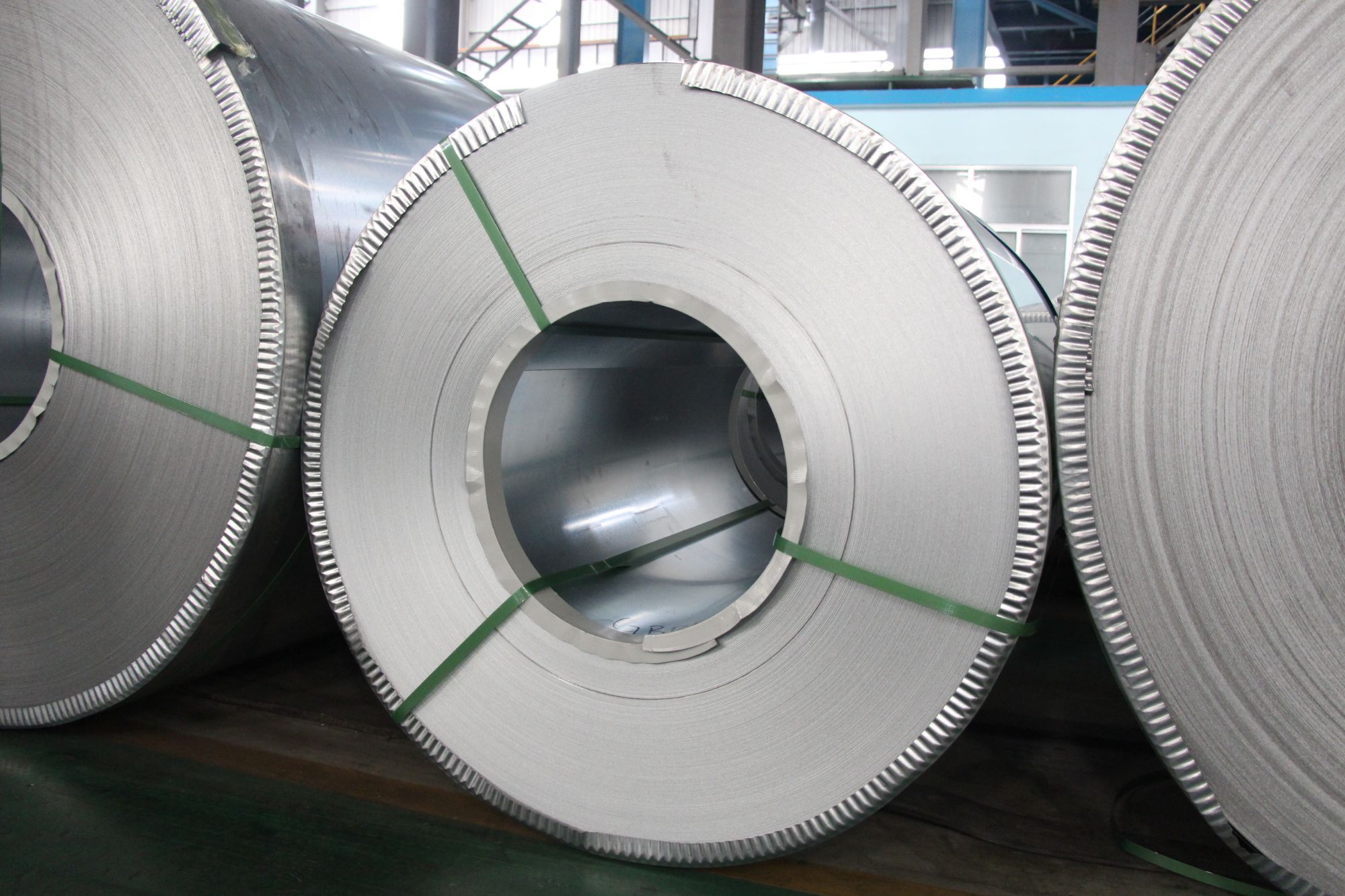
The finished coil rolls off the line with a tight, even wrap and a surface that catches the light without a ripple or scratch. Every foot has been checked for gauge consistency and coating adhesion, so what leaves the plant is already a working component, not just raw material. The edges are trimmed clean, the tension is set, and the coil is banded for the ride to the job site.
When it reaches the rooftop, the crew doesn't have to fight the metal to get it flat. The coil pays out smoothly across the decking, holding its profile through the forming machine. That reliability matters when you're working at height, where every adjustment costs time and every flaw shows up in the finished roof.
FAQ
GALVALUME is a coated steel product where the substrate gets a layer of aluminum, zinc, and a small amount of silicon. The aluminum gives it strong corrosion resistance and heat reflectivity, while the zinc provides sacrificial protection at cut edges. That combination outperforms plain galvanized steel, especially in coastal or high-temperature environments, which is why it's considered premium.
Most tours kick off at the coil receiving area, where massive rolls of cold-rolled steel are unloaded and inspected for surface defects. From there, you follow the strip through cleaning tanks and a continuous furnace before it ever touches the coating bath. Seeing the sheer size of the coils up close is usually the first surprise.
The steel passes through a series of alkaline baths and rinse tanks to strip off mill oils, dirt, and oxides. If any residue remains, the coating won't bond properly, and you'll see premature peeling or rust spots. The cleaning section might look unglamorous, but it's the make-or-break step for adhesion.
After cleaning, the strip is annealed in a furnace, then dipped into a molten bath of aluminum-zinc-silicon alloy. Air knives wipe off the excess to control coating thickness precisely. The steel then cools and solidifies into that signature spangled surface before being recoiled. It happens fast: line speeds can exceed 100 meters per minute.
Technicians check coating weight with X-ray fluorescence, run bend tests to see if the coating cracks, and measure thickness at multiple points across the width. They also inspect the surface for bare spots, dross, or uneven spangle. Any coil outside the tight spec gets downgraded or reprocessed, so what ships out is consistent.
The spangle forms as the molten coating cools and crystallizes. GALVALUME's higher aluminum content changes the solidification behavior, often producing a smoother, smaller, or more uniform spangle compared to classic galvanized. The cooling rate and bath chemistry can be adjusted to create different finishes, but for roofing the focus is usually on uniformity rather than decorative pattern.
Modern lines capture fumes from the coating bath and cleaning chemicals, then recycle or treat them before release. Water from rinse tanks is typically filtered and reused in a closed loop. Scrap steel and edge trimmings get baled and sent back to steel mills. Many plants also use regenerative burners in the furnace to cut natural gas use.
Look for automation and measurement: laser gauges, in-line coating weight sensors, and automated inspection cameras. Also pay attention to how they handle rejected coils. If the plant tags and quarantines off-spec material instead of shipping it, that's a good sign. Premium quality usually means fewer manual workarounds and more closed-loop controls.
Conclusion
The tour begins at the decoiler, where a full-width steel coil is unwound and straightened before it moves toward the coating line. This first step sets the tone for everything after—any edge damage or uneven tension here will follow the strip downstream. The steel then dips into a molten bath of aluminum and zinc, and while it looks like a simple dip, the alloy chemistry and bath temperature are held within very tight bands. The coating that results is not just a paint-like layer; it forms an intermetallic bond with the base steel, which is what gives Galvalume its long-term resistance to rust. After the bath, the strip passes through a series of cooling zones. The rate of cooling is deliberately controlled so the zinc-aluminum structure solidifies in a fine, uniform grain rather than a coarse, brittle one. This is less about speed and more about metallurgical patience.
Once cooled, the flat coated steel goes through profiling rollers that bend it into ribs, corrugations, or custom cross-sections. Different roof profiles need different roller setups, and the changeover between them is a careful mechanical process, not a rushed one. Along the line, automated sensors and trained operators check the coating thickness, adhesion, surface smoothness, and dimensional accuracy. Any small deviation leads to that section being cut out and scrapped. Near the end, the finished sheet is recoiled, wrapped, and tagged with its batch number and profile details. Seeing the full flow from uncoiling to final coil makes it clear that premium steel roofing depends on tightly managed material transitions rather than any single dramatic step.
Contact Us
Contact Person: Nia
Email: [email protected]
Tel/WhatsApp: +86 18954360337
Website: https://www.sdppgi.com