
High Temperature Magnet Manufacturer: Key Considerations for Heat-Resistant Magnetic Solutions
2026-08-01
When extreme heat threatens magnetic performance, choosing the right high temperature magnet manufacturer becomes critical. Whether for aerospace, automotive, or industrial applications, the durability and reliability of heat-resistant magnets hinge on advanced materials, precise engineering, and rigorous testing—areas where DAWA excels. In this blog, we delve into the essential factors you need to weigh when sourcing magnets that must withstand high temperatures, helping you avoid costly failures and ensure long-term stability.
Beyond Curie Point: Keeping Magnets Functional in the Heat
Magnets lose their permanent magnetism above the Curie point, but engineers are pushing these limits with clever material choices. By blending rare-earth elements like neodymium with dysprosium or terbium, they raise the temperature threshold where performance drops. These modified grades stay functional in motors and sensors that routinely see 150°C or higher, without requiring bulky cooling systems. The secret lies in improving the magnet’s intrinsic coercivity, so thermal agitation doesn’t easily flip magnetic domains.
Beyond tweaking bulk alloys, thin-film coatings and grain-boundary engineering offer another layer of heat resilience. For instance, diffusing heavy rare-earth elements only into the outer shell of a grain keeps the core magnetization stable while preventing demagnetization at the surface. Manufacturers also apply ceramic or metallic coatings that shield the magnet from oxidation and corrosion at elevated temperatures, a common failure mode in humid or chemically aggressive environments.
Real-world applications demand more than just high-temperature survival. Designers now match magnet grades to specific duty cycles, considering both peak and continuous thermal loads. Advanced cooling strategies—like embedding magnets directly into fluid-cooled rotors—let electric vehicle traction motors sustain full torque at temperatures that would cripple standard magnets. This holistic approach, marrying materials science with thermal management, is what keeps magnets truly functional when the heat is on.
Not All Magnets Melt: Selecting Alloys for High-Temperature Durability
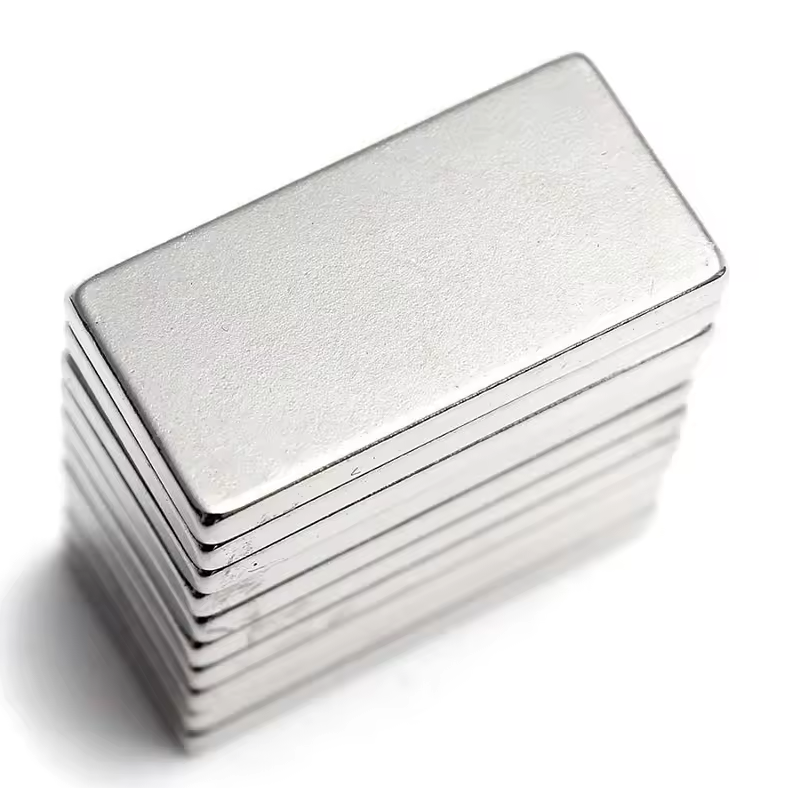
When most people think of magnets, they picture the shiny black chunks holding up grocery lists on a fridge—or maybe the flimsy strips used in toys. What they don’t realize is that ordinary magnets start to lose their pull well before things get seriously hot. A standard neodymium magnet, for instance, can begin to weaken at temperatures as low as 80°C and will completely demagnetize around 310°C. For applications like jet engines, deep-well drilling sensors, or electric motor rotors that routinely push past 500°C, picking the wrong alloy means a quick and expensive failure.
The trick isn’t finding a magnet that simply “doesn’t melt”—it’s finding one whose magnetic structure stays locked in place even when atoms are vibrating violently. Alloys like Alnico (aluminum-nickel-cobalt) and certain grades of Samarium-Cobalt were built for this. Alnico can handle continuous duty above 500°C and still provide useful flux, while top-tier SmCo types survive past 350°C with only minor reversible losses. They achieve this through high coercivity and crystal structures that resist thermal randomization much better than the NdFeB magnets that dominate room-temperature uses.
There’s a trade-off, of course. These heat-resistant alloys often deliver lower maximum energy product at room temperature, and some—like Alnico—are mechanically brittle or vulnerable to demagnetization from strong external fields. But in the world of high-temperature engineering, durability trumps raw strength every time. When your motor has to keep spinning inside a 600°C exhaust stream, knowing the difference between a common magnet and a high-temperature alloy isn’t just a technical detail—it’s the whole design envelope.
From Ovens to Engines: Where High-Heat Magnets Are Critical
In industrial bakeries, conveyor ovens rely on magnetic bearings to rotate fans at scorching temperatures without lubrication—where a single failure could halt production for hours. Samarium-cobalt magnets thrive here, maintaining their strength when ordinary neodymium variants would surrender to the heat. It’s not just about tolerating warmth; these components are engineered to ignore thermal expansion mismatches that would crack brittle ceramics, keeping baguettes uniformly golden and assembly lines humming.
Under the hood of a jet turbine, things get even more demanding. Sensors that track blade vibration and exhaust temperatures operate in zones where metal glows red, yet their signals must stay clean and reliable. Alnico magnets handle this gracefully, with a linear demagnetization curve that lets engineers calibrate instruments without worrying about sudden performance drop-offs. That stability isn’t just a lab statistic—it translates directly into safer flights and fewer unexpected groundings for maintenance.
Then there’s the world of electric vehicle motors hitting peak torque while radiating massive heat. Here, carefully doped ferrite magnets offer a pragmatic compromise between cost and thermal resilience, their crystalline structure deliberately tweaked to avoid phase changes that would sap efficiency. The real art lies in the magnet’s shape: segmented arcs reduce eddy currents that otherwise generate even more heat, a design trick that’s turning what was once a thermal limitation into an engineering balancing act with surprisingly elegant results.
The Real Cost of Thermal Demagnetization in Industrial Settings
When magnets lose their strength due to excessive heat, the financial impact goes far beyond simply replacing a few components. In high-stakes environments like automotive assembly lines or wind turbine generators, a single demagnetized rotor can halt production for hours, costing thousands of dollars per minute in downtime. The real expense includes not only the part itself, but also the labor for diagnosis, the logistics of sourcing a replacement, and the potential collateral damage to connected systems that rely on precise magnetic fields to operate safely.
Facilities often underestimate how thermal demagnetization creeps into maintenance budgets over time. A motor that runs slightly hotter than its rated temperature might not fail outright, but its reduced efficiency forces pumps and fans to work harder, raising energy bills month after month. Over years of operation, these hidden energy losses can exceed the original equipment cost multiple times over, yet they rarely get attributed to magnetic degradation in cost analyses.
Beyond the operational expenses, there are harder-to-quantify costs like safety risks and compliance failures. Imagine a magnetic separation system in a food processing plant losing its grip on metal fragments due to repeated thermal cycling—the recall alone could bankrupt a mid-sized company. Meanwhile, in precision manufacturing, undetected demagnetization can lead to a batch of defective products that passes quality checks, only to fail in the field and erode customer trust. These aren't hypothetical scenarios; they reflect recurring patterns we’ve observed across sectors where heat management isn’t prioritized until after the damage is done.
Custom Magnetic Circuits for Extreme Temperature Profiles
Designing magnetic circuits that maintain consistent performance across wide temperature swings demands a departure from conventional approaches. We begin by selecting core materials that defy the typical degradation seen in standard ferrites—opting for nanocrystalline or amorphous alloys that retain permeability and minimize losses even when operating near their Curie points. Every parameter, from flux density saturation to coercivity, is reevaluated under thermal stress, ensuring the circuit won't falter in the cold of deep space or the blistering heat of downhole drilling equipment.
Our custom geometries are engineered to manage not just electrical demands but also the mechanical strain induced by thermal expansion. Through iterative finite-element analysis, we simulate both magnetic flux distribution and structural integrity under cyclic loading. Special attention is given to winding techniques, where we utilize high-temperature insulation materials and innovative bobbin designs that prevent shorting while allowing heat to dissipate effectively. The result is a magnetic component that operates reliably far beyond the thresholds that would cause ordinary inductors or transformers to fail.
Prototyping in extreme environments is nonnegotiable. We test prototypes in climatic chambers that cycle from cryogenic lows to extreme highs, measuring parameters like inductance drift and core loss evolution in real time. This empirical data feeds back into material selection and construction refinements, often revealing unexpected hysteresis behaviors that aren't apparent at room temperature. The outcome is a truly bespoke magnetic circuit—proven to endure, rather than merely survive, where standard components would be unrecognizable.
Vetting Manufacturers for Reliable Heat-Resistant Magnets
Finding a supplier for heat-resistant magnets goes beyond a quick online search. It demands a careful look at the manufacturer's technical depth and their track record with high-temperature applications. Ask for detailed material datasheets that specify magnetic performance at elevated temperatures, not just room-temperature ratings. A trustworthy partner will readily share test results from independent labs, showing how their magnets hold up under sustained heat, thermal cycling, and exposure to harsh environments. Pay close attention to the maximum operating temperature and the Curie point, but also probe how much flux loss occurs as the magnet approaches those limits.
Beyond specs on paper, gauge their in-house quality controls and engineering support. Request a plant audit or a video walkthrough to see how they handle raw material traceability and heat treatment processes. A conscientious manufacturer will have robust process controls to minimize batch-to-batch variation, which is critical when magnets are the linchpin of a high-stakes assembly. Engage their engineers early—they should be able to suggest tailored solutions, whether it's a custom grade of samarium cobalt or a specific coating that survives repeated thermal shock. If they can't talk intelligently about coercivity drift or microstructure stability at temperature, keep looking.
Finally, verify their reputation among peers in your industry. Reach out to other engineers who have used their magnets in similar thermal conditions and ask about long-term reliability. Look for certifications like ISO 9001 and AS9100 if your application is aerospace-related, but don't stop there—check how they handle failure analysis and corrective actions when things go wrong. A manufacturer that openly shares lessons learned from past challenges demonstrates a commitment to improvement that goes far beyond a simple sales pitch. The goal is a strategic partnership that ensures your magnets won't be the weak link when the heat is on.
FAQ
A magnet's ability to withstand heat depends on its intrinsic coercivity and Curie temperature. Materials like samarium cobalt and certain grades of neodymium are engineered to resist demagnetization even when exposed to temperatures exceeding 200°C, making them ideal for demanding environments.
Samarium cobalt magnets generally offer superior thermal stability, with maximum operating temperatures up to 350°C, whereas standard neodymium magnets may begin losing strength above 80°C. However, specialized high-temperature neodymium grades can work up to 200°C, providing a cost-effective alternative for less extreme conditions.
Beyond temperature rating, you need to evaluate the magnetic circuit design, potential for thermal shock, and the specific load conditions. Coating and plating choices also matter, as some protective layers degrade under heat. Always review the magnet’s demagnetization curve at the intended operating temperature.
AlNiCo magnets offer excellent temperature capabilities, up to 550°C, but have lower magnetic strength and are prone to demagnetization if not handled properly. They remain a viable choice for certain high-temperature sensors and instruments where high coercivity isn’t critical.
Reputable manufacturers conduct rigorous testing, including thermal cycling and high-temperature pull tests, to validate performance. They also provide detailed material datasheets with curves for remanence and coercivity at various temperatures, ensuring you know exactly how the magnet will behave in your application.
These magnets are critical in automotive turbochargers, oil and gas drilling equipment, aerospace actuators, and industrial motors where friction or environmental heat is unavoidable. They keep sensors and positioning systems reliable when ordinary magnets would fail.
Conclusion
When pushing magnets past conventional temperature limits, the conversation inevitably shifts from simple specifications to a deeper understanding of material behavior. It’s not just about the Curie point—the moment magnetism vanishes—but about how much performance erodes well before that threshold. Engineers who’ve wrestled with motor windings baking inside an engine block know that a magnet’s true heat tolerance is defined by its reversible and irreversible losses across the entire operating range. This is where alloy selection gets real: samarium cobalt stands up to 350°C without flinching, while certain grades of neodymium iron boron can be pushed higher with heavy rare-earth tweaks like dysprosium or terbium. But there’s no one-size-fits-all formula; every alloy brings trade-offs in coercivity, corrosion resistance, and mechanical strength. The right manufacturer doesn’t just quote specs—they talk about domain wall pinning, oxidation kinetics, and how grain boundary diffusion can tailor performance in a specific thermal envelope.
Beyond material science, the hidden costs of getting it wrong ripple through entire systems. A drop in flux density from thermal aging might not trigger an immediate failure but silently robs torque, pushes up current draw, and shortens the lifespan of everything from downhole drilling tools to oven fans. That’s why seasoned buyers look for manufacturers who prototype with real-world duty cycles, not idealized lab curves. Custom magnetic circuits—flux-focusing yokes, Halbach arrays, or thermally managed rotors—often make the difference between a magnet that survives and one that excels. Vetting a supplier means scrutinizing their testing regimes: how they handle irreversible loss measurement, aging tests under combined temperature and vibration, and long-term stability data. The best manufacturers offer more than certificates; they carry a culture of collaborative engineering, where heat-resistant solutions are iterated through honest feedback rather than hidden behind glossy datasheets. In the end, confidence in a high-temperature magnet isn’t built on promises—it’s forged in a shared understanding of thermal physics and the scars of field experience.
Contact Us
Contact Person: Kelvin Lo
Email: [email protected]
Tel/WhatsApp: 0769-88561131
Website: https://dawamagnetic.com/