
Mold Steel Companies Pioneering Precision Manufacturing Solutions
2026-06-30
In the world of high-stakes manufacturing, where microns matter and tool longevity defines profitability, mold steel is the unsung hero behind every precision component. Yet, many overlook the innovation happening in this space. Jiangsu Baowu New Materials is rewriting the rules, pioneering advanced mold steel solutions that push the boundaries of accuracy and durability. As industries demand tighter tolerances and faster cycles, the question isn't whether your tooling can keep up—it's whether your steel supplier thinks like an engineer.
Crafting the Future: Next-Gen Mold Steel for Micron-Level Accuracy
In precision manufacturing, a shift of just a few microns can mean the difference between a flawless part and costly rejection. That's where next-generation mold steels step in—engineered not just for durability, but for extraordinary dimensional stability. By refining grain structures through advanced vacuum melting and electro-slag remelting, these alloys virtually eliminate the microscopic deformations that plague conventional tool steels during heat treatment and long production runs. The result is a steel that holds its shape under thermal and mechanical stress, giving mold makers the confidence to push boundaries in micro-molding and high-precision components.
Beyond raw hardness, today's high-performance mold steels offer a rare combination of toughness and wear resistance. Innovations in alloy design, such as carefully balanced chromium, molybdenum, and vanadium additions, create a fine dispersion of carbides that resist abrasive wear while absorbing impact without chipping. This translates directly into longer tool life and consistent part quality, even when molding aggressive engineering plastics or high-speed cycling. For manufacturers chasing sub-micron tolerances, the steel's response to polishing and surface treatments is equally critical—a homogenous microstructure allows mirror-like finishes that replicate intricate details faithfully, shot after shot.
The real leap forward comes from integrating material science with real-world mold performance data. Computational thermodynamics and finite element analysis now guide the development of steels tailored for specific challenges—be it managing heat in conformal cooling channels or minimizing residual stress in large automotive molds. This smart, application-driven approach ensures that the next generation of mold steel doesn't just meet accuracy requirements; it redefines what's achievable, enabling innovation in sectors like medical devices, optics, and micro-electronics where precision is non-negotiable.
Bespoke Alloys Tackling Extreme Manufacturing Environments
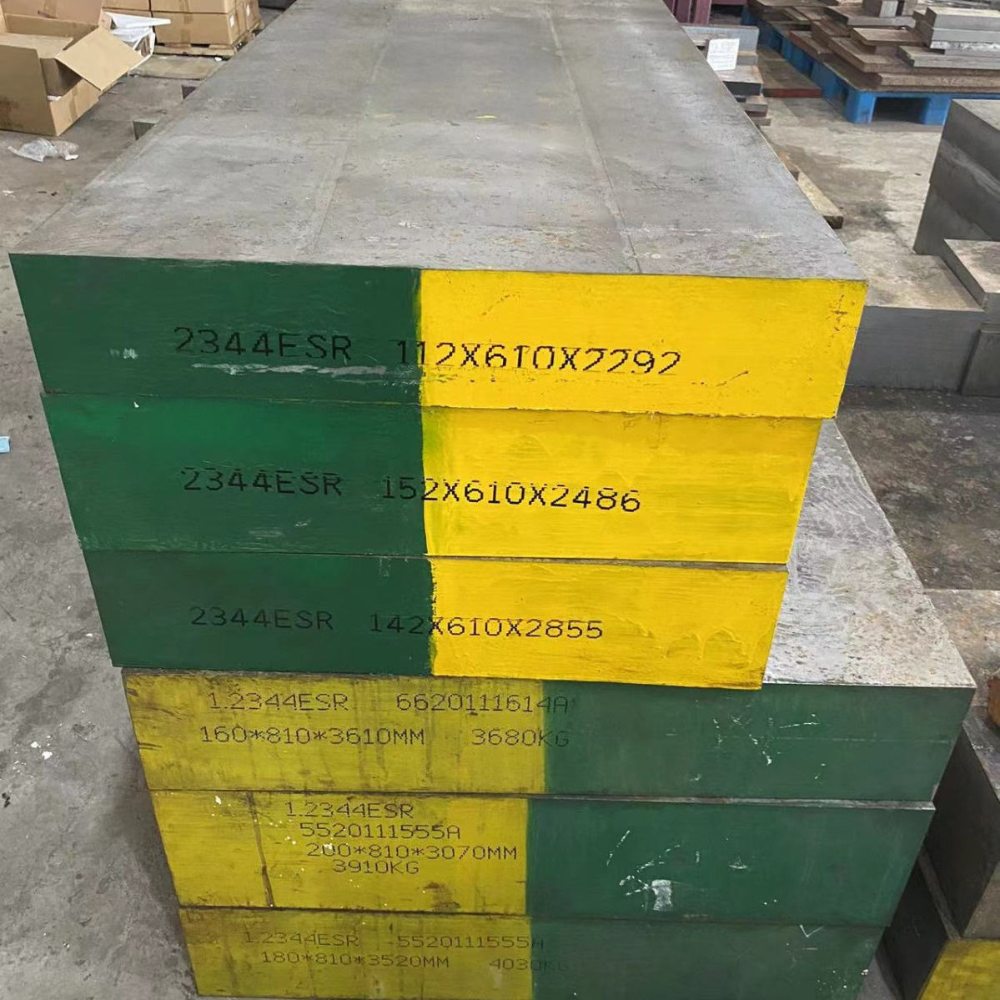
Modern manufacturing pushes the boundaries of what materials can endure. From deep-sea oil rigs facing corrosive saltwater and crushing pressures, to aerospace components that must withstand rapid thermal cycling and intense mechanical loads, the demand for alloys tailored to specific extreme conditions has never been greater. These bespoke alloys are not simply off-the-shelf mixtures; they are engineered at the atomic level, with precise ratios of elements like nickel, cobalt, and titanium to deliver targeted properties such as creep resistance, oxidation stability, or magnetic permeability. This level of customization allows engineers to design parts that maintain structural integrity in environments where standard materials would quickly degrade, fail, or compromise safety.
One striking example is in the realm of additive manufacturing, where bespoke alloys are formulated to perform during both the printing process and the final application. Traditional metal powders often exhibit cracking or poor layer adhesion when subjected to rapid melt-and-solidify cycles, but customized compositions mitigate these issues by optimizing solidification behavior and reducing residual stresses. As a result, critical components for chemical processing equipment or high-performance engines can be produced with intricate cooling channels and lattice structures that improve efficiency without sacrificing strength. The synergy between advanced manufacturing techniques and material science is quietly reshaping industries, enabling designs previously confined to theoretical discussions.
Beyond performance, the economic and logistical advantages of bespoke alloys are often overlooked. Instead of over-engineering with costly bulk superalloys or frequently replacing parts in aggressive environments, companies can specify a material precisely suited to the operating window of their equipment. For instance, a valve in a geothermal power plant might require an alloy that resists both sulfide stress cracking and erosion from high-velocity steam, while remaining cost-effective enough for large-scale deployment. Metallurgists now use computational thermodynamics and machine learning to predict phase formations and refine compositions without endless trial batches, shortening development cycles and putting reliable, application-specific alloys into service faster than ever before. This quiet revolution ensures that whether it’s in the depths of the ocean, the vacuum of space, or the heart of a nuclear reactor, the right alloy is always in the right place.
Where Metallurgy Meets Digital Precision: Smart Tooling Insights
The fusion of metallurgy and digital precision is reshaping how we think about tooling. Smart tooling isn't just about embedding sensors or adding connectivity—it's about creating an ecosystem where the material science of tool steels, coatings, and heat treatments converges with real-time data analytics. This intersection allows for adaptive tool paths, predictive wear modeling, and feedback loops that directly inform alloy selection and surface engineering. It's a shift from static, experience-based choices to dynamic, evidence-driven decisions that squeeze every drop of performance from the metal itself.
We're seeing practical applications that challenge traditional trade-offs. For instance, by pairing high-speed steel formulations with in-process torque monitoring, a boring bar can adjust feed rates on the fly to avoid chatter without sacrificing surface finish. Or consider stamping dies equipped with acoustic emission sensors that detect micro-cracking before it propagates, triggering a controlled cooling cycle rooted in the metallurgical phase transformation data of that specific batch. These aren't futuristic concepts—they're being implemented by teams who understand that advanced manufacturing demands a common language between the foundry floor and the CNC controller.
The real insight is that digital tools don't replace metallurgical expertise; they amplify it. When a tooling engineer interprets a wear pattern through the lens of carbide distribution or retained austenite levels, the data becomes actionable narrative, not just a stream of numbers. This synergy is pushing boundaries in micro-tooling for medical devices, high-feed milling of aerospace alloys, and even additive manufacturing of conformal cooling channels. The conversation has moved beyond sensors and into a deeper understanding of how digital twins can simulate thermal and mechanical stresses at the grain structure level, enabling tool designs that were once considered impossible.
Powering Automotive Breakthroughs with Ultra-Durable Mold Solutions
In the high-stakes world of automotive manufacturing, every component must endure extreme stress, temperature swings, and relentless cycles. Our mold solutions are engineered from the ground up to deliver exceptional longevity, slashing downtime and scrap rates so production lines keep humming without interruption.
Traditional tooling often buckles under the pressure of modern composites and high-strength alloys, but our proprietary surface treatments and precision geometries maintain dimensional accuracy over millions of shots. This translates directly into tighter tolerances, smoother finishes, and parts that require little to no secondary processing.
What sets these molds apart is their ability to adapt. Whether you're molding intricate sensor housings or massive structural panels, the same core durability principles apply—optimized cooling channels, wear-resistant coatings, and intelligent design that anticipates thermal expansion. It's the kind of silent consistency that empowers bold vehicle designs and accelerates time-to-market.
Eco-Conscious Steelmaking for Sustainable Production Lines
Modern steel mills are rethinking every stage of production to shrink their environmental footprint without sacrificing output. From electric arc furnaces powered by renewables to hydrogen-based direct reduction that emits water instead of carbon dioxide, the shift is tangible. These aren't distant pilots—major plants are running real campaigns to replace coal with cleaner alternatives, all while keeping an eye on the metallurgical quality that construction, automotive, and appliance sectors depend on.
Circularity is woven into the factory floor as scrap becomes a starring input rather than an afterthought. Advanced sorting systems separate alloys at the source, allowing high-purity recycled feed that trims energy use dramatically. Meanwhile, by‑products like slag are being channeled into road building and cement, transforming waste streams into revenue streams. It's a quiet but profound redesign of material flows that makes the concept of "waste" feel increasingly obsolete in the steel industry.
The human and regulatory dimensions are reshaping this transition just as much as the technology. Tougher carbon pricing and consumer demand for green building materials are pushing mills to secure third‑party certifications that trace a product's carbon history. Plant managers now talk about energy efficiency not merely as a cost metric, but as a competitive edge that wins long‑term contracts. The result is a production line where sustainability isn't bolted on at the end—it's engineered into the process from heat to finished coil.
Seamless Integration: Mold Steel Supply from Design to Delivery
From the earliest design sketches to the moment the steel arrives at your facility, every step in mold steel procurement can be a potential friction point. That’s why we’ve built a process that bridges the gap between concept and completion, ensuring the material you need is sourced, processed, and delivered without unnecessary delays. Our team collaborates directly with your engineers to interpret technical requirements, recommend optimal grades, and coordinate manufacturing timelines so that the transition from blueprint to production floor feels invisible.
Rather than juggling multiple vendors for different stages, a single point of contact oversees the entire journey. This means dimensional accuracy checks, heat treatment protocols, and logistics are all handled under one roof, minimizing miscommunication. We track each order from start to finish, adapting to last-minute design shifts or urgent delivery needs without compromising material integrity. The result is a supply chain that mirrors the precision of your own operations.
In practice, this integration eliminates the usual back-and-forth that plagues industrial procurement. You receive documentation, certifications, and the steel itself in a unified flow, keeping your projects on schedule and your tooling consistent. It’s not just about delivering steel; it’s about embedding our supply capabilities into your development cycle as a natural extension of your process.
FAQ
Mold steel is a specialized alloy engineered for high hardness, wear resistance, and thermal stability. These properties allow it to maintain tight tolerances during repetitive molding cycles, making it essential for producing accurate and consistent parts in industries like automotive and electronics.
They’re integrating powder metallurgy and bespoke heat-treatment processes to create steels with uniform microstructures. This reduces deformation and extends tool life, enabling manufacturers to achieve finer surface finishes and tighter dimensional control without constant rework.
Companies now rely on finite element analysis and thermodynamic modeling to predict how steel will behave under stress and heat. This allows them to customize grain structures and hardness gradients before casting, drastically cutting trial-and-error time on the shop floor.
Advanced PVD and CVD coatings like titanium nitride or diamond-like carbon are applied to mold surfaces. These layers minimize friction, resist galling, and improve release properties, which means less lubricant use and faster cycle times without sacrificing precision.
Leading firms are adopting electric arc furnace recycling and closed-loop water systems. They also design longer-lasting molds that reduce material waste and energy consumption over the tool’s lifecycle, aligning environmental goals with the demands of high-tolerance production.
Custom solutions involve tailoring alloy compositions and heat treatments to specific molding parameters—like injection pressure or cooling rate. This level of focus eliminates common failure points such as thermal fatigue cracking, delivering reliability that generic steel can’t match.
Performed in oxygen-free environments, vacuum heat treatment prevents surface oxidation and decarburization. The result is a clean, distortion-free mold component that retains its engineered dimensions, crucial for medical or optical-grade components requiring flawless surfaces.
Micro-molding demands materials that flow into sub-millimeter cavities without leaving voids. Specialty steels with exceptional polishability and toughness at thin wall sections allow for the mass production of microfluidic chips and tiny gears with mirror-like finishes.
Conclusion
Mold steel companies are reshaping precision manufacturing with materials that achieve micron-level accuracy, meeting demands for ever-tighter tolerances. They craft bespoke alloys designed to thrive in extreme environments—high heat, corrosive agents, and intense pressure—while digital integration brings real-time analytics and simulation directly to the tooling process. This fusion of metallurgy and smart technology yields insights that reduce trial-and-error, extend tool life, and keep production lines humming with fewer interruptions.
These advances directly power the automotive sector, where ultra-durable molds churn out complex parts with remarkable consistency. At the same time, a growing focus on eco-conscious steelmaking is shrinking the environmental footprint, incorporating recycled materials and cleaner energy. From early design collaboration to just-in-time delivery, the supply chain becomes a seamless pipeline, helping manufacturers move from concept to full-scale output with speed and confidence.
Contact Us
Contact Person: Zoe Liang
Email: [email protected]
Tel/WhatsApp: 86 189 2128 6299
Website: https://www.baowuchina.com