
Rubber Kneader Exporter Insights: Choosing Reliable Mixing Equipment Partners
2026-08-19
Finding a rubber kneader exporter you can trust isn’t just about specs and price lists—it’s about knowing the signs of a partner who won’t disappear when your production line hits a snag. From material consistency to after-sales response times, the details separate genuine expertise from empty promises. As a manufacturer with decades of hands-on mixing experience, SFC has seen too many buyers focus on the wrong criteria. This guide unpacks what actually matters when selecting mixing equipment partners, so you can avoid costly trial-and-error and build a supply chain that keeps your rubber processing running smoothly.
What Factory Audits Reveal About a Kneader's True Build Quality
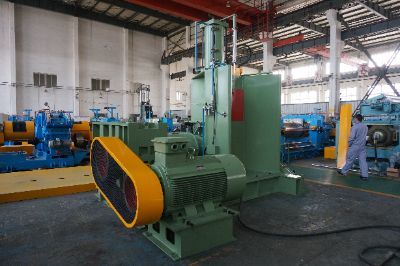
A kneader's spec sheet rarely tells the whole story. Walk through a factory floor during an audit and you start noticing things that never appear in a brochure: the evenness of a weld bead along the main frame, whether bolt holes are drilled clean or left with burr, and whether the mixing chamber was stress-relieved after welding. These small signs separate a machine that will hold alignment for years from one that will slowly tear itself apart under load.
Then there is the testing area. A builder serious about quality runs each kneader under real load, not just a quick no-load spin. They check gearbox temperature rise, monitor vibration at the discharge door, and pressure-test the jacket before paint. Ask to see the test logs. If the response is vague or the test bench looks like it was last used months ago, the "quality control" claim is probably just a sticker on the control panel.
Finally, dig into traceability. The nameplates on motors, gearboxes, and bearings should match the sub-supplier list you were promised. A factory that cannot show incoming inspection records, batch numbers for raw steel, or calibration certificates for its machining centers is hiding something—usually cost-cutting on the components that matter most. True build quality is not one dramatic failure; it is the absence of a hundred quiet shortcuts.
Reading Between the Lines of Material Certifications
A mill test report rarely tells the whole story. The listed chemistry and mechanical properties might match the standard, but that only proves the sample passed on the day it was tested. Heat-to-heat variation, retests, and selective reporting can all nudge the final product away from what the certificate implies. If the document shows an unusual number of retests or an oddly narrow range of values across multiple lots, that is often a signal to ask for the raw data rather than accept the summary.
Traceability is another layer worth checking. A certificate can reference a heat number, but if that heat number does not appear on the physical material or the accompanying tags, the chain of custody is already broken. Also look for subtle mismatches: a test date that predates the production date, a signature that is only a scanned stamp, or a standard revision that does not align with the purchase order. These details are easy to miss, yet they frequently separate a fully verified shipment from one that merely carries the right paperwork.
Why Rotor Geometry Shapes Mixing Consistency
Rotor geometry directly controls how material flows through the mixing chamber. Variations in blade angle, tip clearance, and profile curvature create different shear rates and flow patterns. A steeper rotor blade, for instance, forces material to recirculate more aggressively, breaking up agglomerates. In contrast, a flatter profile produces gentler folding, which suits heat-sensitive formulations. Without precise geometric tuning, some regions experience high stress while others remain nearly static, leading to uneven dispersion.
The gap between rotor tips and the chamber wall is another critical factor. Tight clearances generate intense local shear, which helps distribute additives but can also generate excessive heat. Wider gaps allow larger particles to pass through without sufficient breakdown. By shaping the rotor with a progressive clearance pattern, engineers can stage the mixing intensity: initial zones pull material in, middle zones apply high shear, and final zones smooth out temperature gradients. This sequencing prevents dead spots where material lingers unmixed.
Surface features like helical twists or notched edges also steer axial and radial flow. A helical rotor pushes material along the shaft while simultaneously folding it inward, promoting uniform residence time. If the helix angle is too shallow, material may short-circuit through the center; too steep, and it backs up at the feed throat. Matching rotor shape to the specific viscosity and filler content of the batch ensures that every particle experiences a similar mixing history, which is the foundation of consistent output.
Questions That Expose a Partner's After-Sales Commitments
Most partnership agreements sound impressive on paper, but the real test comes after the ink dries. Instead of asking whether they offer support, dig into the specifics: Who exactly handles customer complaints once a deal closes? What's the expected response time for a technical issue that surfaces three months later? If the answer is vague or points to a generic ticketing system with no named owner, treat that as a warning sign.
Another angle is to ask about worst-case scenarios. For instance, if a key account escalates a defect that requires engineering involvement, what's the partner's escalation path? Do they have a dedicated post-sales team, or does the original salesperson get pulled back in? The more you hear about defined processes and actual people—not just promises—the better you can judge whether their after-sales commitment is real or just a slide in a pitch deck.
How Customization Requests Separate Real Builders from Brokers
When a client asks for a tweak to the floor plan or a non-standard material, the response reveals everything. A real builder leans into the challenge—they'll sketch revisions, walk the site with you, and explain trade-offs in plain terms. There's a sense of ownership in their voice because they're actually going to build the thing. A broker, on the other hand, tends to deflect. They'll steer you back to whatever's already listed, promising it's 'almost the same' or 'just as good.' The difference isn't about skill; it's about whether the person on the other end of the table has ever held a hammer.
Custom requests also test accountability. Builders aren't afraid to say no when something won't work structurally or would blow the budget—but they'll offer an alternative that honors the original intent. Brokers often say yes to everything because they're not responsible for the final result. They're passing your wish list to someone else, and that distance shows up in vague timelines and hand-wavy cost estimates. If you want to know who you're really dealing with, ask for a change that requires a structural calculation. Watch what happens next.
Then there's the matter of follow-through. A builder's customization process ends with a signed change order, a revised schedule, and materials ordered in your name. Every request becomes part of the project's paper trail. Brokers tend to leave customization as a verbal promise—something to be 'figured out later' once the contract is signed. Later never comes. The real separator isn't just willingness to customize; it's whether the person can execute that customization without handing you off to a stranger. Builders keep you in the loop. Brokers keep you in the dark.
Verifying Performance Claims Without a Costly Trial Run
Before committing to a full-scale production run, many teams rely on physics-based simulations and finite element analysis to stress-test a design under real-world loads. By feeding material properties, thermal profiles, and load cycles into a validated model, you can spot weak points early and compare the predicted output against the stated performance targets. The key is to use boundary conditions that reflect actual operating conditions rather than idealized lab settings, so the numbers hold up outside the whiteboard.
Another route is to tap into historical data from similar equipment or processes. If a supplier claims a 15% efficiency gain, pull records from past installations with comparable duty cycles and ambient conditions. Look at variance across those datasets—not just the average—to see whether the claimed improvement falls within normal run-to-run fluctuation. A quick statistical check can reveal whether the new number is a genuine step change or simply cherry-picked from the best-performing unit.
For high-stakes decisions, consider a staged validation plan that starts with low-cost bench tests or pilot batches. Use accelerated life testing to compress years of wear into weeks, but be explicit about the acceleration factors and failure modes you are willing to extrapolate. Pairing these results with an independent audit of the vendor's test data often uncovers gaps between marketing sheets and measured reality, without ever paying for a full trial run.
FAQ
Ask for a video walkthrough of their assembly floor and request references from buyers who process compounds similar to yours. Pay attention to whether they perform in-house rotor machining or outsource it, because that affects lead time and quality control. A short visit to their factory, even if virtual, usually reveals more than a polished brochure.
A real manufacturer can adjust rotor geometry, chamber volume, or control logic without waiting for a third party. They typically keep a stock of critical spares like seals and wear plates, and their engineers can discuss mixing thermodynamics instead of reading from a datasheet. Ask for photos of partial assemblies or serial numbers from previous shipments.
Focus on effective chamber volume, rotor speed range, cooling water flow requirement, and drive power at maximum fill factor. Also check the control system's recipe memory and whether temperature probes are placed where they actually sense the batch, not just near the wall. These details affect batch-to-batch consistency more than the machine's outer dimensions.
Request their average spare parts lead time for your region and ask how they handle emergency breakdowns across time zones. A dependable partner usually provides clear wiring diagrams, a bill of materials with generic part numbers, and remote diagnostic guidance without charging for every email. If they avoid giving you maintenance documentation before purchase, that is a warning sign.
Foundation work, voltage and frequency conversion, cooling tower capacity, and operator training get overlooked in initial quotes. You may also pay extra for customs clearance, local safety inspection, and commissioning if the exporter's technician must travel. Good suppliers list these as line items early, so you can compare real landed cost rather than just ex-works price.
Small differences in rotor clearance, chrome plating thickness, and PLC tuning can shift mixing temperature profiles and dispersion quality. Some factories use cheaper electrical components that trip under high ambient temperatures, while others derate the motor to protect it. That is why a sample batch test with your own rubber formula matters more than the spec sheet.
Run the kneader with your actual compound and measure fill factor, ram float, temperature rise over time, and visual dispersion on a mill. Record noise levels near the gearbox and check for oil leaks around the dust stops. If the exporter cannot replicate your operating conditions, agree on pass-fail criteria based on viscosity curve and power draw instead of a generic demonstration.
Work with the exporter to adjust rotor speed ratios, ram pressure, and cooling water flow during trial mixing. For high-viscosity compounds, you might need a different rotor profile or a larger drive margin to avoid stalling. A knowledgeable partner asks about your filler loading, rubber type, and final Mooney target before recommending a configuration, rather than offering one standard machine.
Conclusion
Factory audits cut through polished brochures and expose what actually holds a kneader together. Weld penetration, frame alignment, bearing seat tolerances, and the way a builder manages rejected parts reveal more about durability than any spec sheet. Material certifications deserve the same scrutiny: a certificate is only as trustworthy as the traceability behind it. Ask to see heat numbers and test reports, not just a typed summary. Rotor geometry then determines how well those materials perform. Lobe profiles, tip clearances, and helix angles control shear history and dispersion, so a supplier who cannot explain why a particular rotor works for your compound is likely selling inventory, not engineering.
After-sales commitments separate transactional sellers from long-term partners. Press for concrete answers on spare parts stock, response times, and whether a technician can support a rebuild remotely. Customization requests sharpen this divide: a genuine builder will adjust chamber volume, rotor speed, or metallurgy to fit your mixing task, while a broker simply forwards another factory's quote. To verify performance claims without gambling on a trial run, request case studies using compounds with similar Mooney viscosity and filler loading, and ask for torque curves or thermal imaging from existing installations. Specific, verifiable evidence from real production lines tells you more about a kneader's capability than any marketing claim.
Contact Us
Contact Person: Chen Zhengwei
Email: [email protected]
Tel/WhatsApp: +86-13963975727
Website: https://www.sfcrubbermachine.com