
Solar Aluminum Rail Manufacturers: China's Top 10 List
2026-08-05
When building a solar mounting system, the backbone is often the aluminum rail. In China's booming solar industry, countless manufacturers claim to be the best—but how do you separate the leaders from the rest? In this top 10 list, we spotlight the most reliable names, including Egret Solar, whose precision engineering and robust supply chain have earned them a place among the elite. Read on to discover which manufacturers are truly raising the bar.
China's Solar Aluminum Rail Innovators You Should Know
Behind the rapid expansion of solar farms across China's vast landscapes lies a quiet revolution in mounting systems. The aluminum rails that hold photovoltaic panels in place are no longer just commodity components—they're becoming precision-engineered solutions shaped by a handful of forward-thinking manufacturers. These companies are rewriting the rules with corrosion-resistant alloys, modular designs that slash installation time, and integrated cable management that keeps installations tidy and safe. Their work is helping drive down the levelized cost of solar energy in some of the world's most demanding environments, from the Gobi Desert's scouring sands to the salty mists of coastal arrays.
What sets these innovators apart isn't just metallurgy—it's an obsession with real-world performance data. One standout firm developed a proprietary anodizing process that triples the rail's lifespan in high-sulfur industrial zones, while another introduced click-together rail systems that reduce on-site labor by 40%. These aren't theoretical breakthroughs; they're field-tested in partnerships with EPC contractors who needed better answers to warping, galvanic corrosion, and thermal expansion. By weaving feedback loops between installation crews and design teams, these players are creating products that adapt to China's diverse climates without inflating the bill of materials.
The impact reaches far beyond the factory floor. When a rail system can be installed without specialized tools or easily recycled at end-of-life, it reshapes project economics in subtle but powerful ways. Smaller solar developers, once locked out by high balance-of-system costs, now have access to lightweight yet sturdy aluminum solutions that ship flat and assemble with minimal fuss. It's this blend of material science and practical ingenuity that's helping push solar beyond the usual sunny provinces into new territories. Keep an eye on these pioneers—they're not just supplying parts; they're quietly redesigning the backbone of renewable energy infrastructure.
Profiles of Leading Solar Aluminum Rail Producers
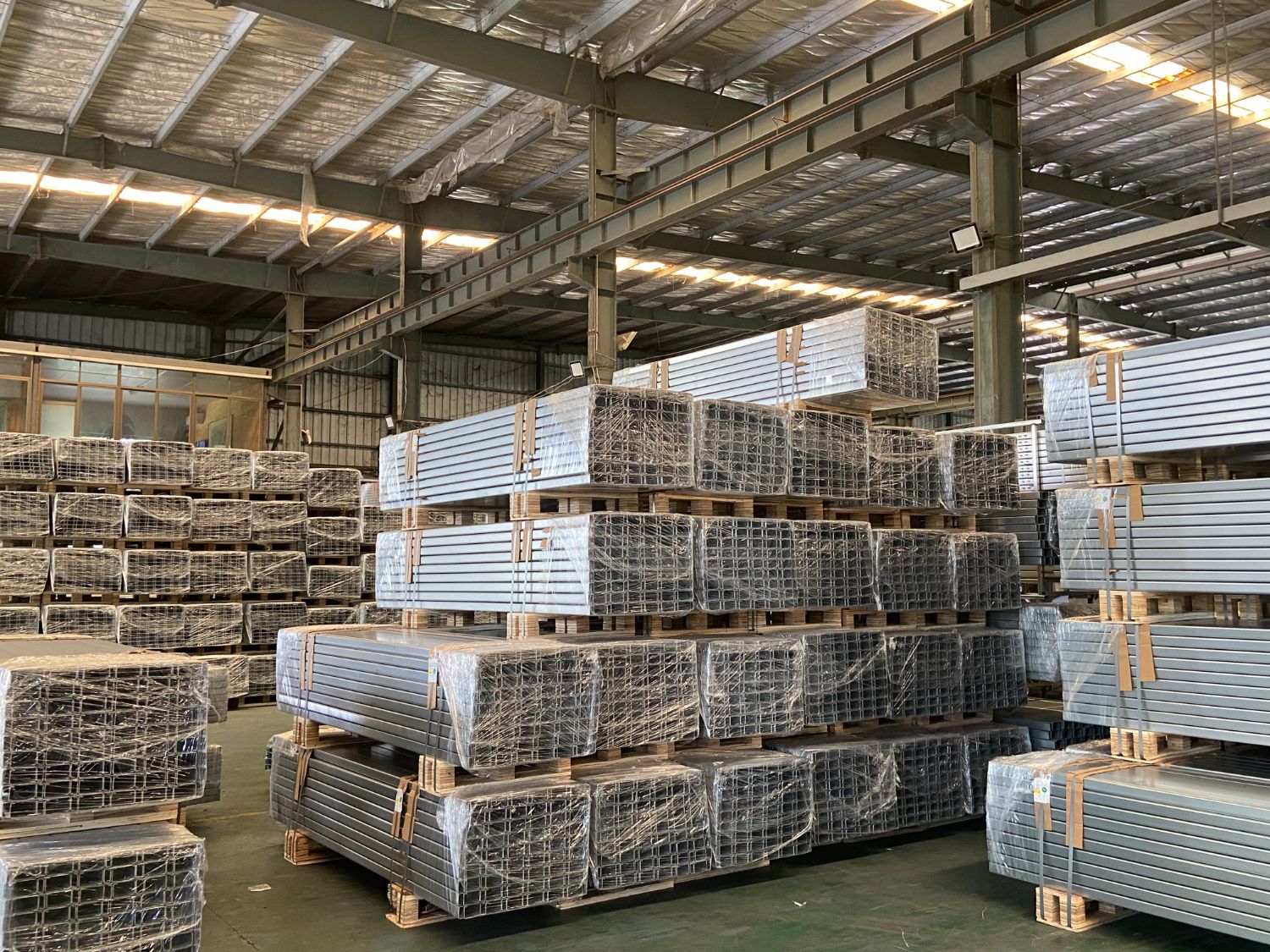
A handful of manufacturers dominate the solar aluminum rail market, each bringing distinct engineering philosophies to the table. Unirac, with its roots in New Mexico, has long set benchmarks for structural integrity—their rails often incorporate proprietary alloy blends that resist galvanic corrosion better than standard 6000-series aluminum. Meanwhile, IronRidge has carved a niche by merging heavy-duty performance with installer-friendly features, such as pre-drilled arrays and snap-in grounding lugs that cut installation time by nearly half. These companies don’t just sell extrusions; they invest heavily in wind tunnel testing and finite element analysis, turning simple rails into precision components that can withstand 130 mph gusts when paired with their recommended clamps.
On the global stage, names like K2 Systems and Schletter have reshaped how aluminum rails interface with evolving roof architectures. K2’s modular rail joints, for instance, enable seamless transitions on complex roof planes without custom fabrication, a boon for large commercial installs where time is money. Schletter, manufacturing in Germany and the U.S., pushes the envelope with recycled-content aluminum that meets stringent LEED requirements while maintaining a 10-micron anodized finish—a subtle nod to lifecycle thinking that many competitors overlook. These leaders don’t merely extrude aluminum; they operate closed-loop recycling systems where offcuts and retired rails from decommissioned arrays re-enter their billet supply, shrinking the carbon footprint of each meter produced.
Smaller regionally focused producers are also claiming ground by hyper-specializing. Companies like SunModo and EcoFasten have gained traction by designing rail profiles that double as wire management channels, eliminating the need for separate cable trays. Their quick-mounting systems, often employing single-tool assembly, cater to a growing DIY market without sacrificing compliance with UL 2703 bonding standards. Others, like RK Solar and Everest Energy, focus exclusively on extreme environments—their rails undergo accelerated salt spray testing for coastal deployments and UV cycling for deserts, with custom sealants that prevent micro-fractures in the anodized layer. This fragmentation proves that “leading” isn’t just about volume; it’s about carving out a technical edge that addresses a specific installer pain point, whether that’s weight per linear foot, thermal expansion tolerance, or integration with tracker controllers.
How Chinese Manufacturers Are Shaping Solar Rail Technology
The solar rail industry has seen a seismic shift in recent years, thanks largely to the relentless innovation and manufacturing prowess emerging from China. Chinese manufacturers have moved far beyond simply copying existing designs—they're now pioneering lighter, more durable materials and modular systems that slash installation times and costs. By integrating advanced aluminum alloys and proprietary coating technologies, these companies are producing rails that withstand extreme weather while remaining easy to transport and assemble, effectively setting new global benchmarks.
What sets Chinese solar rail technology apart is the seamless fusion of cutting-edge automation in production with real-world field data. Factories leverage robotic assembly lines and AI-driven quality control to maintain micron-level precision at scales that were previously unimaginable. This manufacturing efficiency doesn't just drive down prices; it enables rapid iteration, so improvements in rail design—like integrated cable management or snap-fit connectors—reach the market in months rather than years. As a result, installers worldwide are gaining access to systems that are not only more affordable but also significantly faster to deploy.
Beyond the hardware, Chinese manufacturers are reshaping the solar rail landscape through collaborative innovation with EPCs and developers. Instead of offering one-size-fits-all solutions, they're co-engineering custom rail systems tailored to specific regional climates, roof types, and seismic requirements. This customer-centric approach, combined with extensive in-house testing labs that simulate decades of wear in days, has turned Chinese rail suppliers into essential partners in utility-scale and commercial solar projects across every continent. They're not just shaping the technology; they're redefining how the solar industry thinks about mounting systems.
Key Strengths of Top 10 Solar Rail Makers in China
China's leading solar rail manufacturers have carved out a distinct competitive edge by deeply integrating automated production lines with rigorous quality controls. Many have developed proprietary alloys and surface treatment processes that significantly boost corrosion resistance, extending panel support lifespans well beyond industry norms even in coastal or high-humidity installations. This isn't just about adopting advanced machinery; it's the relentless refinement of material science combined with real-time monitoring systems that catch microscopic flaws early, ensuring every rail meets exacting load-bearing specifications without adding unnecessary weight.
Beyond technical prowess, their strength lies in a rare fusion of massive scalability and nimble customization. These firms operate production bases capable of delivering gigawatt-scale orders on tight deadlines, yet they remain attentive to project-specific demands—whether that means adapting rail geometries for bifacial modules, integrating wire management channels directly into profiles, or engineering snap-lock connections that slash on-site labor time. Their engineers collaborate early with EPCs and developers, offering design feedback that often reduces overall structural costs while maintaining or improving wind and snow load ratings. This consultative approach, backed by deep inventories of cold-formed steel and aluminum, creates reliability that projects in accelerating markets like the Middle East and Latin America increasingly depend on.
A less visible but equally critical strength is their investment in long-term field feedback loops. Top manufacturers maintain dedicated teams that analyze performance data from operational solar farms, tracking how rails behave under decades of thermal cycling, soiling, and extreme weather. Insights from these studies directly inform iterative product improvements and testing protocols that surpass baseline international certifications. By openly sharing field reports and degradation analyses with clients, they've built a trust marker that goes beyond transactional supplier relationships, positioning themselves as technical partners invested in the full lifecycle of a solar asset.
Selecting the Right Chinese Solar Rail Supplier for Your Project
Finding a dependable solar rail supplier in China isn’t just about scrolling through Alibaba listings. The real work starts with verifying manufacturing capabilities—look beyond the polished websites and ask for video tours of the production floor, quality control labs, and packing lines. A supplier that hesitates to share real-time footage might be hiding a small workshop behind a glossy façade. Also, cross-check their certifications: a TUV or UL mark carries more weight if you can trace it back to the testing lab directly rather than accepting a scanned PDF at face value.
Pricing matters, but chasing the lowest quote often backfires. When you’re comparing offers, ask for a cost breakdown that separates raw aluminum extrusion, anodizing or coating, and connector components. This transparency exposes whether a supplier is cutting corners on alloy thickness or using inferior fasteners that could corrode within months. One practical move is to request a sample batch before committing to a full order—not just a single pristine rail, but a mixed set pulled from their existing inventory. This lets you inspect consistency across pieces, which is far more telling than a carefully prepared sample.
Don’t overlook the human factor. A supplier’s willingness to discuss past project failures or logistical challenges openly is often a green flag. It signals a long-term mindset rather than a quick-sale mentality. Engage them in a conversation about packaging and shipping—if they’ve dealt with bending or scratching during transit from Chinese ports, they should have concrete improvements to share, like reinforced corner protectors or denser pallet stacking. These small insights reveal whether you’re dealing with a partner who will actually help you solve problems once the containers leave the factory.
Market Trends Driven by China's Solar Aluminum Rail Leaders
China's dominance in solar aluminum rail manufacturing is reshaping global supply chains in ways that few predicted. As the world accelerates toward renewable energy targets, the country's top producers have leveraged specialized extrusion technologies and economies of scale to offer mounting structures that are both lighter and more durable than conventional steel alternatives. This shift is not just about cost—it's sparking a fundamental rethink of how solar farms are engineered, with designers now favoring snap-fit, corrosion-resistant rail systems that drastically cut installation time and long-term maintenance.
Downstream, this evolution is driving unexpected collaborations between Chinese rail leaders and international project developers. Rather than simply shipping generic components, these manufacturers are co-creating customized solutions tailored to regional climates—from typhoon-resistant profiles for coastal Southeast Asia to frost-tolerant alloys for Northern European fields. Such partnerships are blurring the line between supplier and strategic ally, and as a result, we're seeing faster licensing of new rail designs that integrate cable management and microinverter mounting, turning a once-commodity part into a key enabler of system performance.
Meanwhile, domestic policy shifts within China are sending ripple effects through the global market. Stricter environmental regulations on aluminum smelting are pushing top rail makers to invest in closed-loop recycling and low-carbon billets, creating a new tier of "green aluminum" rails that command a premium in markets like Europe, where carbon border taxes loom. This twin focus on circularity and high-performance alloys is quietly pivoting the conversation from price per ton to lifetime value—a change that could redefine procurement standards for utility-scale solar worldwide.
FAQ
Solar aluminum rails serve as the mounting framework for solar panels, providing a sturdy, corrosion-resistant base that secures modules to rooftops or ground mounts while allowing for efficient heat dissipation and easy adjustment.
China has a mature aluminum supply chain, advanced extrusion technology, and competitive production costs. Many manufacturers have also invested heavily in automated anodizing and cutting lines, which ensures consistent quality and high volume output for global solar projects.
Key certifications include ISO 9001 for quality management, ISO 14001 for environmental practices, and product-specific standards like UL listing, TÜV certification, or JIS compliance. These indicate the rails meet international structural and safety requirements.
Check their annual production capacity, lead times, and past project portfolios. A reliable manufacturer will readily share case studies for utility-scale solar farms and offer in-house die design for custom profiles. Quick mold development and prototyping capabilities are also strong indicators.
Anodizing and powder coating are the most prevalent. Anodizing creates a thick, weather-resistant oxide layer ideal for coastal or humid environments, while powder coating offers additional color options and UV protection. Both treatments significantly extend the rail's service life beyond bare aluminum.
Yes, many top suppliers offer integrated solutions including clamps, splices, and brackets that are pre-engineered to work together. This reduces on-site compatibility issues and often streamlines warranty support, as one company takes responsibility for the entire mounting structure.
Conclusion
China's role in solar aluminum rail manufacturing goes far beyond sheer volume; it's a story of rapid innovation and strategic market influence. The country's top producers are pushing boundaries with high-strength, corrosion-resistant alloys and precision extrusion processes that streamline solar panel mounting. They have made installation faster and systems more durable, often integrating patented quick-connect features that reduce labor costs. These manufacturers are not just component suppliers but technology partners, continuously refining designs to meet evolving global standards. Their ability to scale production without sacrificing quality gives them a distinct edge, backed by vertically integrated supply chains and aggressive R&D investment. This has positioned them as indispensable players in the photovoltaic ecosystem, driving down the levelized cost of energy worldwide.
When selecting a supplier from China's top tier, project developers should look beyond price to assess technical support, certification track records, and logistical reliability. Many leading firms now offer end-to-end testing and tailored design services, supporting everything from residential rooftops to utility-scale solar farms. Meanwhile, market trends reveal a shift toward higher yield strengths and recyclable aluminum profiles, reflecting broader sustainability commitments. These manufacturers are also pioneering smart manufacturing techniques to guarantee consistency across massive order volumes. As global solar deployments accelerate, partnering with the right Chinese rail maker can significantly de-risk supply chains and boost project bankability. The interplay of competitive pricing, product innovation, and responsive customer service is what truly defines the top manufacturers, making them preferred choices for installers and EPCs alike.
Contact Us
Contact Person: Leite
Email: [email protected]
Tel/WhatsApp: (+86)13666072898
Website: https://www.egretsolars.com/
