
Substantial Rotary Unions: The Hidden Powerhouse Behind Seamless Fluid Transfer
2026-07-24
In the world of heavy machinery and precision engineering, some of the most vital components are also the least visible. Rotary unions—often no larger than a coffee mug—quietly shoulder the task of transferring fluids under pressure while parts spin at high speed. Without them, entire production lines would seize up, yet they rarely earn a spot in the limelight. This hidden powerhouse is exactly where MOFLON steps into the spotlight, redefining what seamless fluid transfer can accomplish. Let’s pull back the curtain on these unsung heroes and explore why they matter far more than you might think.
The Unseen Hero of Industrial Motion: What Makes Rotary Unions Indispensable
In the relentless hum of factories and the ceaseless spin of machinery, a small component works silently to keep fluids flowing without a hitch. Rotary unions, often overlooked, bridge the gap between stationary pipes and rotating parts, ensuring that coolant, hydraulic oil, or steam reaches exactly where it’s needed. Without them, the intricate dance of industrial motion would grind to a halt, tangled in hoses and leaks.
What truly sets these devices apart is their ability to handle multiple media types simultaneously while rotating at high speeds, all without cross-contamination. From the precise temperature control in a printing press to the massive steel coils in a rolling mill, rotary unions adapt to demands that static connections can never meet. They endure punishing pressures and temperatures, yet their design remains elegantly simple—a testament to engineering that values function over fanfare.
Beyond the obvious mechanics, their indispensability reveals itself in moments of failure. A seized bearing or a worn seal can shut down an entire production line, turning seconds of downtime into monumental costs. It’s then that the unseen hero steps into the spotlight, reminding us that the most critical parts of any system are often the ones we never think about—until they stop working.
Beyond Basic Swivels: How Modern Rotary Unions Redefine Fluid Handling
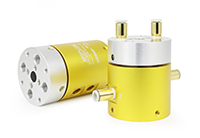
Gone are the days when a rotary union was little more than a leaky swivel joint. Today's advanced designs incorporate precision-engineered sealing technologies and multi-port configurations that handle everything from high-pressure hydraulics to sensitive cooling fluids without cross-contamination. They adapt to the specific demands of each application, whether it’s meeting the rigorous hygiene standards of food processing or enduring the thermal extremes of semiconductor manufacturing.
What truly sets modern rotary unions apart is their ability to manage multiple media types simultaneously while maintaining a compact footprint. Integrated sensors and IoT-ready monitoring transform these components from passive connectors into active system guardians, tracking temperature, pressure, and wear in real time. This connectivity not only prevents catastrophic failures but also enables predictive maintenance, slashing unplanned downtime in automated production lines.
Beyond mere fluid transfer, the latest generation of rotary unions actively contributes to energy efficiency and sustainability. By minimizing internal pressure drops and precisely controlling flow paths, they reduce the pump energy required in industrial processes. At the same time, maintenance-free options with extended service intervals cut down on consumable waste, aligning operational goals with environmental targets without sacrificing performance.
Silent Efficiency: The Engineering Behind Leak-Free Continuous Rotation
Achieving whisper-quiet, leak-free continuous rotation isn't just a design goal—it's a meticulous balancing act of materials, geometry, and fluid dynamics. Engineers start by rethinking the very interface between rotating and static components. Instead of traditional lip seals that degrade over time, advanced systems employ non-contact labyrinth or ferrofluidic seals that rely on microscopically precise gaps. These create a tortuous path for fluids, effectively blocking leaks without generating friction or noise. The result is a seal that can spin endlessly at high speeds while maintaining a near-silent profile, even under demanding pressure differentials.
Material selection further elevates this silent performance. Specialized composites and ceramics with low thermal expansion coefficients prevent dimensional changes as temperatures fluctuate, ensuring the sealing geometry remains stable after thousands of hours. Surface finishes refined to nanometer-scale smoothness reduce micro-turbulence at the interface, a common source of both audible hum and energy loss. In critical applications like medical imaging or semiconductor manufacturing, these details coalesce into a rotary union that operates so smoothly, technicians often report checking the power indicator just to confirm it's running.
Behind the scenes, integrated monitoring sublimates potential failures before they occur. Embedded sensors track minute variations in torque or vibration, feeding data to adaptive control algorithms that compensate for wear or load changes in real time. This proactive approach not only prevents leaks but also extends maintenance intervals far beyond conventional benchmarks. The engineering philosophy is simple: true efficiency isn't just about doing more with less—it's about doing it so gracefully that the machinery fades into the background, leaving nothing but flawless, uninterrupted motion.
Critical Roles Across Industries: From Heavy Machinery to Precision Medical Devices
In the world of heavy machinery, components like bearings and seals operate under extreme loads, vibrations, and contaminants. The margin for error is slim—every millimeter of movement must be accounted for to avoid catastrophic failure. Engineers rely on materials science and advanced lubrication to extend service life, often embedding sensors that monitor wear in real time. These seemingly mundane parts are the backbone of mining excavators, wind turbine gearboxes, and tunnel boring machines, where downtime can cost thousands per hour.
Shift to a hospital operating room, and the demands grow even more exacting. Surgical robots and imaging systems require components that function with sub-micron precision, often inside the human body. Here, cleanliness isn't just a preference—it's a sterile imperative. Miniature ball bearings in a biopsy drill or a dental handpiece must spin at over 400,000 rpm without generating heat or shedding particles. The same principles of reliability apply, but the stakes change fundamentally when the application touches living tissue.
What ties these extremes together is an obsession with predictability. Whether it's a hydraulic cylinder on a construction site or an infusion pump in an ICU, the underlying engineering philosophy remains constant: failure is not an option. The cross-pollination of technologies—like ceramic materials originally developed for aerospace now used in joint replacements—shows how innovation travels across sectors. Mastering reliability in one field often unlocks breakthroughs in another, making the boundary between heavy industry and healthcare thinner than it first appears.
Debunking Myths: Why Not All Rotary Unions Are Created Equal
It’s easy to assume that any rotary union will do the job as long as it fits the mounting pattern. But that line of thinking often leads to premature failures, excessive maintenance, and costly downtime. The truth is, the performance gap between a standard rotary union and a well-engineered one can be massive. Factors like seal technology, bearing design, and fluid compatibility aren’t just spec-sheet details—they’re the fundamentals that determine how long the unit will last under real-world conditions.
Another persistent myth is that higher price always means higher quality. While premium components do cost more, the real differentiator is how well the rotary union is matched to the application. A custom-engineered solution for a specific temperature range, pressure, or media type can outlast a generic “heavy-duty” model many times over. It’s about finding the right engineering, not just the right price tag. Overlooking application specifics like thermal expansion, vibration, or intermittent flow is a recipe for disappointment.
Perhaps the most damaging myth is that all rotary unions require the same level of maintenance. Some designs are inherently more tolerant of dirty environments or minor misalignments, while others demand pristine conditions. Understanding these differences upfront transforms the selection process from a commodity purchase into a strategic decision—one that directly impacts overall equipment effectiveness. When you dig into the engineering, it becomes clear that not all rotary unions are cut from the same cloth.
Future-Ready Design: Smart Materials and Sealing Innovations Shaping Tomorrow’s Unions
The boundaries of what a seal can accomplish are expanding rapidly, driven by materials that sense, adapt, and even heal themselves. Traditional gaskets and O-rings are giving way to polymers infused with microcapsules of healing agents that activate when a crack forms, silently preserving integrity without human intervention. At the same time, shape-memory alloys and piezoelectrics are being integrated into joint designs, allowing seals to adjust their clamping force in response to temperature swings or pressure surges. These aren't far-off lab concepts—they're already being prototyped for offshore pipelines and aerospace hydraulic systems where a single leak can cascade into catastrophe.
But the real leap forward lies in how these intelligent seals communicate. Embedded with micro-scale sensors, they can now transmit real-time data on compression set, chemical exposure, and wear patterns to a central monitoring system. Maintenance teams no longer guess when a seal might fail—they receive precise alerts weeks in advance, turning unscheduled downtime into planned interventions. This shift from periodic inspection to predictive intelligence changes the entire lifecycle economics of critical equipment, especially in pharmaceutical processing and semiconductor fabrication where cleanliness and consistency are non-negotiable.
Designers are also rethinking the geometry of the seal itself. Additive manufacturing has unlocked lattice structures and functionally graded surfaces that were impossible to mold or machine just a few years ago. A single printed component can now combine rigid mounting features with an ultra-compliant lip that follows surface irregularities down to the micron. Paired with nano-coatings that repel aggressive chemicals or reduce friction by orders of magnitude, tomorrow's unions will quietly outperform anything we've relied on for decades—often without so much as a visual difference on the outside.
FAQ
A substantial rotary union is engineered for demanding applications requiring high pressure, high speed, or heavy-duty media transfer. Unlike standard versions, it features reinforced construction, advanced sealing technologies, and larger flow passages to handle aggressive fluids, extreme temperatures, and continuous operation without compromising reliability.
They operate behind the scenes in rotating machinery, rarely visible yet critical for performance. Their robust design allows them to silently manage fluid transfer under immense stress, enabling everything from industrial cooling systems to high-speed printing presses to run smoothly without downtime.
Key sectors include heavy manufacturing, oil and gas, marine propulsion, paper production, and food processing. Anywhere large rotating drums, reels, or spindles need continuous fluid flow—like steam, water, or hydraulic oil—these unions are indispensable.
They use multiple independent seals, often with advanced materials like silicon carbide or tungsten carbide, to create a labyrinth-style barrier. Precision lapped faces and spring-loaded mechanisms maintain constant contact even as the unit experiences thermal expansion or vibration, virtually eliminating leakage paths.
Yes, many heavy-duty models feature dual or multi-passage configurations. Independent channels keep media separate, allowing one union to simultaneously transfer coolant, pneumatic air, and hydraulic fluid, which streamlines machine design and reduces assembly complexity.
Regularly monitoring pressure drop and temperature at the union, ensuring proper alignment during installation, and following the manufacturer's lubrication and seal replacement schedule are key. Purging lines before start-up also prevents debris from damaging sealing surfaces.
By minimizing friction and pressure loss, they reduce the pump energy required to move fluids through rotating assemblies. Efficient unions also lower heat generation, which can decrease the load on cooling systems, directly lowering overall power consumption in continuous operations.
Advances include integrated condition monitoring sensors that predict failures, use of composite materials for lighter yet stronger bodies, and hybrid designs that combine fluid transfer with electrical or data slip rings, creating smarter, more versatile rotating joints for Industry 4.0 environments.
Conclusion
It’s easy to overlook the components that quietly keep industrial machinery running, but rotary unions are a prime example of essential engineering hiding in plain sight. These devices—often called rotary joints or swivels—enable the continuous flow of liquids, gases, or even electrical signals between stationary and rotating parts. Without them, countless processes would grind to a halt. From cooling systems in steel mills to hydraulic circuits in excavators, their role is both foundational and often underappreciated. What truly sets them apart is the precision behind their design: modern variants rely on advanced sealing technologies and materials like engineered ceramics and carbon composites, which allow them to maintain leak-free performance under extreme pressures and temperatures. This silent efficiency isn’t just about preventing drips—it’s about preserving system integrity in environments where failure isn’t an option, such as medical CT scanners or semiconductor manufacturing. A common misconception is that all rotary unions are interchangeable, but the reality is starkly different. Cheap, poorly designed copies can lead to catastrophic downtime, while purpose-built units account for media type, speed, and environmental conditions, proving that in this field, quality isn’t a luxury—it’s a necessity.
Looking across industries, the versatility of rotary unions becomes impossible to ignore. In heavy machinery, they handle high-flow hydraulic oil in the most rugged conditions; in food and pharmaceutical production, they must meet stringent hygiene standards without sacrificing performance. Meanwhile, the push toward smarter manufacturing is reshaping their future. Integrated sensors that monitor wear, temperature, and pressure in real time are turning these once-passive components into active contributors to predictive maintenance strategies. Innovations in seal geometry and self-lubricating materials are extending service intervals and reducing energy consumption. The shift isn’t just incremental—it’s redefining what’s possible. As automation spreads and demands for uptime intensify, the evolution of rotary unions reflects a broader trend: the unseen elements of a system often hold the most potential for breakthroughs. By combining rugged reliability with adaptive intelligence, the next generation of rotary unions is poised to keep fluids—and progress—flowing seamlessly, proving that even the most hidden components can drive monumental change.
Contact Us
Contact Person: Xiangpin Li
Email: [email protected]
Tel/WhatsApp: 86 186 1706 8578
Website: https://www.moflon.com