
Top 10 ABB Electromotors for Superior Industrial Performance
2026-08-21
When industrial downtime costs thousands per hour, the choice of electromotor isn't just technical—it's strategic. This list of the top 10 ABB electromotors highlights options that deliver superior torque, efficiency, and reliability under demanding conditions. Whether retrofitting an existing line or planning a new installation, the right motor can cut energy waste and extend service intervals. At Soochee, we've seen how pairing proven ABB designs with local sourcing support helps plants achieve faster ROI without compromising performance. Read on for the models that consistently outperform.
IE4 Efficiency Without the Premium Price Tag
IE4 efficiency often comes with a steep asking price, but that gap is narrower than many buyers assume. Advances in motor design and manufacturing have steadily brought super premium efficiency within reach, cutting energy losses without forcing you to pay for features you don't need.
Instead of locking efficiency behind a premium brand tier, these motors focus on the basics done well: tighter rotor-stator gaps, lower-loss electrical steel, and optimized cooling. The result is lower operating cost and a faster payback period, all while staying close to IE3 price points. For applications that run long hours, the savings show up quickly on the utility bill.
The M3BP Cast-Iron Frame That Outlasts Your Production Line
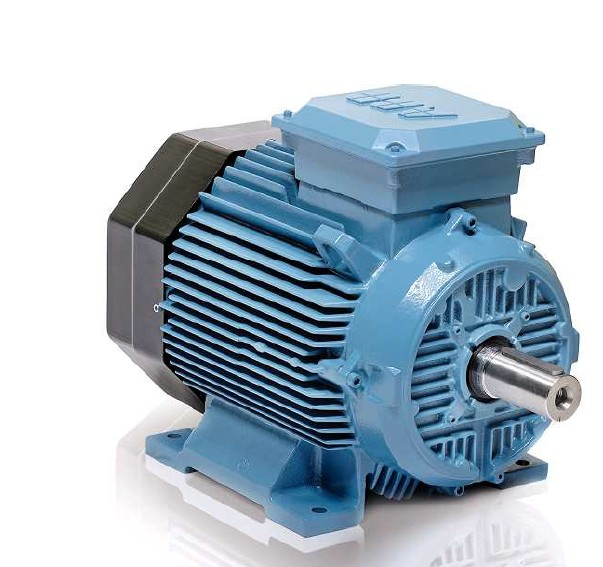
The M3BP motor doesn't rely on flimsy housings or thin sheet metal. Its cast-iron frame brings real mass and stiffness to the table, soaking up the vibration and thermal cycling that quietly kill lesser machines. That rigidity keeps the shaft aligned and the bearings seated properly, so you're not chasing misalignment issues six months down the road.
Every surface that matters gets machined after casting, not before. That means the mounting feet, flange faces, and bearing bores all line up within tight tolerances from the first day. Combined with a tough primer and finish, the frame shrugs off moisture, chemical splash, and the kind of casual abuse that comes with a busy plant floor.
When a production line runs around the clock, nobody wants to swap a motor every few years. The M3BP's cast-iron shell is built to stay put long after the conveyor, pumps, and fans around it have been rebuilt or replaced. It's a boring kind of reliability, and that's exactly the point.
Hazardous-Area Motors That Don’t Compromise on Torque
In environments where flammable gases or combustible dust are a constant concern, motor selection often forces a trade-off between safety and performance. Many hazardous-area designs prioritize enclosure integrity to the point of sacrificing output, leaving operators with sluggish starts and limited load handling. That compromise disappears with motors engineered to deliver full torque without breaching the protective barriers required for classified locations.
The key lies in optimizing the magnetic circuit and thermal management rather than simply derating the machine. By using high-grade laminations, precision-wound stators, and enhanced cooling paths that do not rely on external airflow, these motors sustain high starting torque and steady pull-out torque even under variable loads. The result is a drive that starts heavy conveyors, mixers, or pumps confidently, without tripping or stalling in the middle of a critical process.
Field experience shows that such torque-dense hazardous-area motors reduce the need for oversizing, which in turn lowers energy consumption and mechanical stress on driven equipment. They also simplify installation because the same frame can handle both normal and demanding duty cycles. For plant engineers, that means fewer spare parts to stock and a more predictable maintenance schedule, all while staying fully compliant with area classification standards.
Smart Sensors on ABB Motors Catch Bearing Wear Before It Catches You
Bearing wear rarely announces itself with a loud knock. More often it starts as a faint, high-frequency vibration or a slight temperature rise deep inside the motor—easy to miss during routine inspections. ABB’s smart sensors sit directly on the motor frame and track these early signatures around the clock, turning what used to be a surprise failure into a slow, readable trend.
The key is not just collecting data, but catching the pattern shift before metal starts grinding. When the sensor detects irregular vibration bands or a heat spike that doesn’t match normal operating load, it flags the bearing long before it seizes. Maintenance teams get a window of days or even weeks to plan a replacement—not a midnight scramble during a full production halt.
That shift changes how plants think about motor health. Instead of guessing based on hours run or waiting for the next scheduled teardown, operators see exactly which bearing is degrading and how fast. The result is less unplanned downtime, fewer cascading failures in coupled equipment, and a maintenance budget that goes toward prevention rather than emergency repairs.
Matching Motor Speed and Frame Size to Real Pump and Fan Loads
Many pump and fan applications operate well away from the nameplate duty point. The affinity laws suggest power rises with the cube of speed, but actual system curves, static head, and throttling often change that relationship. Before selecting a motor, measure or calculate the true operating speed and shaft power at the required flow and pressure. Simply reusing the old motor speed may lock in a larger frame than necessary and waste energy every hour the machine runs.
Frame size is not just a function of power. Shaft height, flange dimensions, bearing spread, and cooling method all affect whether a motor will fit and survive. A four-pole motor may have a larger body than a two-pole unit of the same rating, yet direct drive at lower speed can eliminate a gearbox and reduce total footprint. With variable frequency drives, compare the torque envelope against the load profile, not just the peak horsepower.
Startup torque and inertia also deserve attention. Clean centrifugal pumps and axial fans typically start under light load, but some systems with settled solids or high static pressure need extra pull-up torque. Check that the frame mounting holes, shaft diameter, and keyway match the driven equipment or an approved adapter. The goal is a motor that reaches its efficiency sweet spot at real operating conditions, not a design point that exists only on paper.
Low-Maintenance Design Details That Reduce Unplanned Stops
The most effective way to cut unplanned downtime isn’t adding more sensors or alerts—it’s designing out the failure points from the start. Self-lubricating polymer bearings in conveyor rollers eliminate the weekly grease schedule that often gets skipped during busy periods. Sealed cartridge-style spindles on cutting tools prevent contamination ingress without requiring manual repacking. These choices quietly remove the “forgot to maintain it” failure mode altogether.
Another overlooked detail is the use of oversized magnetic filters in hydraulic return lines. Standard spin-on filters clog quickly and trigger bypass valves, sending abrasive particles straight into pumps and proportional valves. Switching to a dual-stage magnetic separator with a coarse screen means the system keeps running even when the filter element is heavily loaded, giving operators a wider window to schedule maintenance during planned pauses instead of reacting to a pressure drop alarm.
Finally, pay attention to fastener selection on high-vibration equipment. Standard hex bolts on motor mounts and gearbox flanges loosen over time, causing misalignment and eventual coupling failure. Replacing them with wedge-locking washers or Nord-Lock style pairs removes the need for repetitive torque checks. Combine that with quick-release inspection panels instead of bolted covers, and daily walk-around checks become ten-second visual confirmations rather than fifteen-minute disassembly tasks—keeping the line moving without surprises.
FAQ
The M3BP series is usually the first choice. These cast iron motors are built for demanding process applications, with reinforced bearings and winding protection that hold up under constant thermal and mechanical stress.
It comes down to the rotor and stator design. Super-E motors use higher-grade electrical steel and optimized slot geometry, so losses stay low even at partial load. Many plants see a drop in electricity use that pays back the price difference within a couple of years.
Yes, the M3KP and M3JP series are designed for hazardous areas. They meet ATEX and IECEx requirements, with flameproof enclosures and Ex e terminals that prevent internal sparks from igniting the surrounding atmosphere.
Synchronous motors, especially the AMZ and AMS ranges, are hard to beat. They maintain a constant speed regardless of load swings and can be built up to very high outputs, which suits refinery and mining drives where reliability is non-negotiable.
Cast iron frames like the M3BP absorb vibration better and resist corrosion, while aluminum models like the M3AA are lighter and easier to handle in less aggressive settings. The process performance line also includes wider bearing options and additional cooling fins for sustained heat dissipation.
An M3GP high-output cast iron motor is a strong candidate. It has a high torque margin for fan startup and can be fitted with special coatings and protected bearings, so it handles dust and moisture without frequent servicing.
ABB Ability Smart Sensors attach to the motor frame and track vibration, temperature, and bearing condition in real time. Maintenance teams get early warnings instead of reacting to failures, which reduces unexpected downtime and helps plan servicing during scheduled windows.
In most cases, yes. ABB offers modular build options across many series, so you can specify special shaft dimensions, terminal boxes, encoders, or voltage/frequency combinations. The motor is assembled to order rather than built from scratch, which keeps lead times reasonable.
Conclusion
Industrial buyers often assume that hitting IE4 efficiency means paying a steep premium, but several ABB motors in this top-ten group break that pattern. The cast-iron M3BP series, for instance, pairs high efficiency with a frame built to shrug off years of vibration, moisture, and thermal cycling—so the motor doesn't become the weak link in a demanding production line. When the environment turns hazardous, ABB's explosion-proof and flameproof designs still deliver the torque curves that mixers, conveyors, and compressors actually need, without forcing engineers to oversize or derate. That means fewer compromises on either safety or mechanical output.
Beyond rugged housings, the smarter maintenance features separate these motors from ordinary catalog picks. ABB's integrated sensors watch for early bearing wear by tracking vibration and temperature trends, flagging a problem before a shaft seizes or a winding overheats. Equally practical is the ability to match motor speed and frame dimensions to real pump and fan loads instead of relying on a generic one-size-fits-most selection. Low-maintenance touches—such as regreasing intervals designed around actual duty cycles, sealed terminal boxes, and precision-balanced rotors—cut the unplanned stops that eat into throughput. Together, these details explain why a short list of ten ABB electromotors can cover a wide range of industrial performance demands without padding the maintenance budget.
Contact Us
Contact Person: Jenny Jaa
Email: [email protected]
Tel/WhatsApp: 0086 152 9510 6006
Website: https://www.china-motor-supplier.com