
UL FM Gate Valve Company: Your Trusted Source for Certified Fire Protection Valves
2026-07-27
When it comes to safeguarding lives and property, every component in a fire protection system matters—but few are as critical as the valves that control water flow. UL and FM approvals are the gold standard, yet finding a supplier that consistently delivers certified performance can be a challenge. That’s where DRIFCO comes in, quietly powering projects with gate valves built to meet the strictest global benchmarks. In this post, we pull back the curtain on what makes DRIFCO the go-to choice for engineers and contractors who refuse to compromise on safety.
Gate Valves That Meet the Strictest Safety Standards
Every component in a gate valve that targets high-risk environments must undergo rigorous material verification and design review well before it ever reaches the field. The industry’s most demanding specifications now require valves to cope with extreme thermal swings, corrosive media, and cyclic pressures without the slightest hint of stem leakage or seat deformation. This is achieved not just through better alloys, but through precision machining tolerances that are verified at multiple stages of production. Fire-safe testing, fugitive emission certification, and full traceability back to the mill heat number are non-negotiable. When a valve is built under these protocols, plant operators can rely on it to isolate hazardous flows decisively, even after years of minimal maintenance.
Beyond metallurgy and manufacturing, the true measure of safety lies in how the valve behaves during an emergency shutdown or a pipeline surge. Advanced seat geometries are now designed to shear through accumulated sludge or scale without losing bubble-tight shutoff, a feature that standard slab-gate units often lack. Anti-blowout stem arrangements are engineered with secondary retention shoulders that engage if primary fasteners yield under abnormal loads. Additional safeguards, such as double block-and-bleed capability or body cavity relief systems, are integrated to prevent pressure locking in critical isolation services. These design features collectively reduce the likelihood of uncommanded opening or process fluid escape, which can have catastrophic consequences in refining, chemical, and gas processing facilities.
Selecting a gate valve that truly meets the strictest safety standards means looking past glossy datasheets and instead demanding independent third-party validation. Reputable manufacturers provide full documentation of type-testing carried out in ISO 17025-accredited labs, covering everything from cryogenic endurance to high-temperature torque performance. End users are increasingly specifing seat leakage acceptance criteria that exceed standard API Class shutoff, moving toward zero visible leakage for extended duration tests. The handful of suppliers who invest in proprietary sealing technologies and automated test benches also offer greater consistency between production runs. Ultimately, a safety-certified gate valve is not defined by any single certification mark, but by the engineering discipline woven into every stage of its design, fabrication, and final inspection.
UL and FM Approvals: What They Mean for Your Project
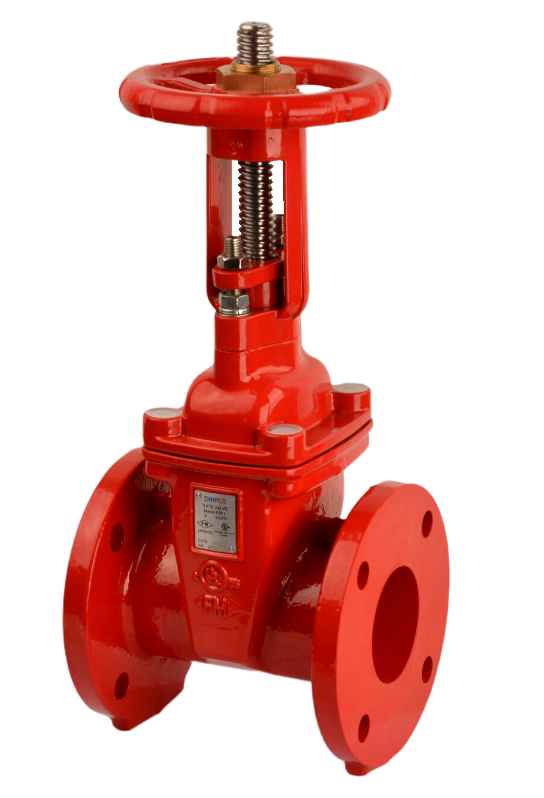
Navigating the landscape of safety certifications can feel like decoding a secret language—especially when UL and FM approvals land on your spec sheet. These aren't just bureaucratic stamps; they're gatekeepers that can make or break a project's timeline and budget. UL (Underwriters Laboratories) focuses primarily on electrical and fire safety testing against North American standards, ensuring components like circuit breakers or pipe hangers won't fail under stress. FM Global, on the other hand, leans heavily into property loss prevention and large-scale fire performance, often evaluating entire systems rather than isolated products. Missing one of these could mean a costly redesign or, worse, a construction delay while you scramble for compliant alternatives.
What catches many project managers off guard is the subtle layer beneath the approvals: local adoption and authority having jurisdiction (AHJ) preferences. A fire pump listed by UL might sail through in one city, while another requires FM specifically due to historical loss data in their region. It's not about which is 'better'—it's about which box your stakeholder needs checked. Early conversations with your insurance carrier and building official can uncover hidden demands before they become roadblocks. Sometimes, a dual-listed (UL/FM) product is the safest bet, but don't assume it exists; verifying actual listings on the certifying bodies' online directories is a habit worth forming.
Beyond compliance, these approvals can influence your operational peace of mind. FM's rigorous large-scale fire tests, for example, sometimes exceed basic code requirements, potentially leading to lower insurance premiums. UL's comprehensive component testing gives you confidence that interconnected parts won't spark a cascading failure. By treating approvals not as red tape but as a risk-management layer, you shift from reactive checking to proactive design. Ask suppliers for the exact certification number, not just a logo on a brochure—counterfeits are an ugly reality. In the end, a project that respects these distinctions doesn't just pass inspection; it builds a reputation for resilience.
Designed for Critical Fire Protection Applications
Every component in a critical fire protection system must earn its place. That means moving beyond generic specifications and into territory where materials, seals, and activation mechanisms are selected not for convenience, but for how they hold up when things go sideways. Our approach strips away the non-essentials, focusing instead on response consistency in environments that punish indecision—think offshore platforms drenched in salt spray, or chemical storage areas where a single spark could change everything.
The real test isn’t the controlled burn in a lab; it’s the unscripted moment years later when equipment buried in grime or subjected to vibration fatigue still has to perform. That’s why we treat procurement not as a checklist exercise, but as an engineering problem. Valve housings get reinforced at stress points nobody wants to talk about. Detection chambers are shielded from false triggers that plague lesser units. The result is hardware that develops a reputation on the ground—often in places where replacement isn’t just costly, it’s logistically near-impossible.
Integration matters just as much as the individual device. A fire suppression system is only as strong as its weakest link, so we’ve moved toward modular assemblies that let field technicians swap out worn sections without re-engineering the whole network. This isn’t about chasing the next certification badge; it’s about acknowledging that in critical settings, downtime isn’t an option, and a system needs to survive its own environment before it ever gets a chance to save someone else’s.
Built to Last: Materials and Manufacturing Excellence
From the careful selection of raw materials to the final quality checks, every step reflects a deep commitment to creating products that endure. We source metals, polymers, and composites that are tested beyond standard tolerances, ensuring they hold up under stress, temperature swings, and repeated use. The result is a level of dependability you can feel the moment you pick it up—no flimsy parts, no shortcuts, just solid construction that quietly outperforms expectations year after year.
Our manufacturing process blends time‑honored techniques with modern precision engineering. Craftsmen and automated systems work in tandem, with each weld, seam, and finish inspected by eyes and lasers alike. This dual approach catches microscopic flaws before they become failures, and it allows us to maintain consistency across thousands of units without losing the human touch that makes each piece feel thoughtfully made. The factory floor isn’t just an assembly line; it’s a place where pride and innovation meet.
Real-world durability isn’t theoretical—it’s proven in the hands of people who use our gear in demanding settings. From dusty workshops to busy kitchens, the materials resist wear, clean up easily, and keep performing long after cheaper alternatives would need replacing. That reliability comes from deliberate choices: stainless steel grades chosen for corrosion resistance, polymers formulated to resist impact, and coatings that protect without adding bulk. It’s a straightforward philosophy: build it right the first time, and it won’t need to be built again.
Custom Solutions for Complex System Requirements
Every system carries its own set of demands—latency thresholds that seem impossible, throughput levels that push hardware limits, or integration points that feel like untangling a knot. Off-the-shelf approaches often fall short, not because they’re badly designed, but because they weren’t built with your specific constraints in mind. We start by listening to the gritty details: the legacy protocols you’re stuck with, the compliance hurdles you dread, the user expectations that keep shifting. That’s where a solution begins to take shape, not in a feature list but in the friction points you live with every day.
Crafting a bespoke system means embracing constraints rather than fighting them. Sometimes the elegant answer is a minimalist microkernel that does one thing exceptionally well; other times it’s a carefully orchestrated mesh of services that trade a bit of simplicity for resilience under load. The goal is never to deliver a stack of specifications—it’s to hand over something that feels inevitable once you use it, as if the clutter of conflicting requirements was always meant to resolve into that exact design. We sketch, prototype, and iterate in quick cycles, using real workloads and edge cases that never make it into a typical requirements doc.
The real measure of a custom solution isn’t how clever the architecture looks on a whiteboard. It’s whether your operations team stops dreading Monday mornings, whether the error logs go quiet, and whether the work no longer feels like a battle against the tooling. By staying close to the metal—and even closer to the people using the system—we build things that don’t just meet the spec on paper; they earn trust in the messy, unglamorous moments where a lesser system would fall apart.
A Partner You Can Rely On From Spec to Installation
We don’t just supply components — we step in early, working alongside your team to understand the full scope of your project. From the moment you share your initial specs, our engineers become an extension of your own, questioning assumptions and fine-tuning details that often get overlooked. This upfront collaboration helps avoid costly revisions later and ensures every piece fits your vision from the very start.
As the design takes shape, we guide you through material selections, compliance requirements, and integration nuances that can trip up even seasoned professionals. Our hands-on approach means we catch potential conflicts long before they become problems, saving you time and reducing stress. Every recommendation we make is backed by years of field experience, not just catalog data, so you get practical solutions that actually work on site.
When it’s time for installation, we don’t disappear. You’ll have direct access to the same specialists who helped you plan, ensuring continuity and accountability. We’re there to troubleshoot, clarify, and lend a hand however we can — because a true partner stays committed long after the paperwork is done.
FAQ
Each valve we ship comes with full UL and FM documentation, so there's never any guesswork during an inspection. We also plate the internals with corrosion-resistant materials that go beyond typical coatings — a small detail that makes a big difference in long-term reliability.
Our certifications aren't just on paper. Every design is tested at approved facilities, and we provide the traceable test reports right in the crate. You'll see the actual burst pressures and cycle counts, not just a generic certificate.
Absolutely. Our team can walk through your system's hydraulic demands, end connections, and installation constraints. We often catch mismatches before they become field issues, which saves contractors a lot of rework.
Most tailored configurations leave our facility within three to four weeks. If you need it faster, we keep a buffer stock of common trims and can often ship in under two weeks without the rush fees other suppliers tack on.
Yes. We design the wedge and seat geometry to seal tightly at both low and high pressures, which is crucial for dry systems that can see pressure spikes. The drain and indicator post options are also streamlined to work with common fire riser layouts.
Rather than referring you to a call center, you'll get direct contact details for our product engineers. If there's ever a field concern, we arrange a tech visit or ship a replacement before we even discuss fault — keeping the system online is the priority.
The truth is, plenty of valves can pass a one-time test but struggle with sediment and repeated cycling. Ours are built with a full port, resilient seated wedge that's tested to close and open under flow, and we've reinforced the stem and thrust collar for the torque you actually encounter in a buried or post-indicator setting.
Conclusion
For those tasked with specifying or maintaining fire protection systems, the name UL FM Gate Valve Company carries significant weight. It represents a commitment to safety that goes beyond simply meeting baseline requirements—our entire product line is engineered to satisfy the rigorous demands of both UL and FM certifications. These approvals are not just stamps on a data sheet; they are a promise that every gate valve has undergone exhaustive testing for reliability under extreme conditions. When a project calls for valves that must operate flawlessly during a fire event, having that third‑party validation eliminates uncertainty and streamlines the approval process with authorities having jurisdiction. We understand that in critical applications, there is no margin for error, and that mindset is baked into every stage of our design and manufacturing workflow. From the initial concept through final inspection, each valve is built to perform as if lives depend on it—because, ultimately, they do.
What truly sets UL FM Gate Valve Company apart, however, is the combination of robust construction and collaborative support that extends well beyond the sale. Our valves are manufactured from high‑grade ductile iron, bronze, and stainless steel, with a focus on corrosion resistance and long‑term sealing integrity. Yet we recognize that standard configurations rarely fit every installation perfectly. That is why we offer tailored solutions—whether it is a unique end connection, a specialized coating, or a completely custom trim package—engineered to integrate seamlessly into complex fire protection networks. Equally important is the partnership we form with contractors and engineers. From the earliest specification phase through installation and commissioning, our technical team provides guidance that helps avoid costly missteps. In an industry where reliability and accountability are non‑negotiable, our clients know they can count on a supplier that treats each project as a long‑term relationship rather than a one‑time transaction.
Contact Us
Contact Person: George
Email: [email protected]
Tel/WhatsApp: 13863633883
Website: https://www.es-fire.com